Lượt xem: 4.015

Hi everyone—I'm a beauty and aesthetic care consultant. Recently, I’ve received many questions about facial rejuvenation, especially the confusion between different intervention-based methods.
Once we pass the age of 30, signs of aging—wrinkles, sagging skin—often become more noticeable and can make us feel concerned. With so many beauty technologies available today, deciding whether you should choose a surgical facelift or a thread lift can feel like a difficult problem.
Today, I’ll take time to analyze this deeply—from both a scientific and real-world perspective—so you can gain a complete, clear understanding. This won’t be casual chatting; we’ll get straight to the core of the issue so you can confidently decide what’s best for you.
Before deciding between a surgical facelift and a thread lift, it’s crucial to understand how each method actually works. Many people assume “any intervention is basically the same,” but in reality, their biological principles are very different.
A surgical facelift is a traditional, highly invasive procedure. The surgeon makes a long incision (often starting near the temples, following the hairline, and extending behind the ear) to lift and separate facial tissue.
.png)
The goal is to remove excess skin and tighten the SMAS layer (the superficial musculoaponeurotic system—connective tissue beneath the skin) to smooth and firm the face. Simply put, it is a “remove and reposition” approach that directly eliminates sagging in a mechanical way.
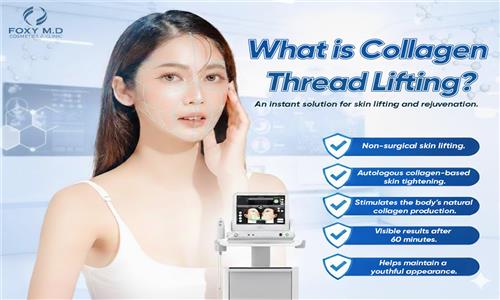
A thread lift (also called thread insertion) is a much less invasive aesthetic medical procedure. Instead of cutting away skin, the doctor inserts biocompatible threads (such as PDO or PCL) under the skin using very fine needles.
Thread lifting works through two main mechanisms:
Immediate mechanical lifting: small barbs on the threads anchor into tissue and lift it upward.
Natural biological stimulation: the presence of threads triggers the body to produce more collagen and elastin around them.
This newly formed collagen network acts like a natural “support framework,” making the skin firmer and more elastic over time. So when comparing a surgical facelift vs. a thread lift, you’re essentially weighing skin removal and structural repositioning versus natural regeneration and stimulation.
To help you picture this clearly, let’s compare the most important factors that influence real decision-making.
A surgical facelift is a major operation that typically requires general anesthesia or deep sedation and must be performed in a fully sterile operating room. Because it involves large incisions and extensive tissue separation, recovery usually takes 2 to 4 weeks, and it may take several months for swelling to fully settle and scars to fade.
A thread lift, however, is performed with local anesthesia. You remain awake and can usually go home immediately afterward. Needle entry points typically heal in 1–2 days, and any swelling or bruising (if it occurs) is usually mild and resolves within about a week.
If you’re busy and cannot take extended downtime, your decision will often lean toward thread lifting. However, when it comes to results for more severe aging, surgery tends to offer stronger long-term impact.
A surgical facelift can last 7 to 10 years, sometimes longer, depending on genetics and skincare habits—because excess skin is removed and facial structure is more comprehensively repositioned.
Thread lifting typically lasts 3 to 5 years, depending on thread type (e.g., absorbable surgical threads, collagen threads, etc.). Over time, the threads dissolve and aging continues naturally. That said, many people still look better than before due to the collagen stimulated by the threads.
Surgery generally carries higher potential risks, such as noticeable scarring, facial nerve injury, hematoma (blood collection), or post-operative infection.
Thread lifting is usually much safer, with the most common issues being temporary skin puckering, mild asymmetry early on, or thread visibility/exposure—most of which can be corrected if treated properly.
No single method is best for everyone—only what is most suitable for your current condition.
At Foxy M.D Cosmetics & Clinic, I often advise clients to start by looking in the mirror and realistically evaluating their aging level.
If you’re 30 to 50 years old, with mild to moderate sagging and smile lines that aren’t extremely deep, thread lifting can provide very natural, effective rejuvenation.
Thread lifting is especially ideal if you:
are afraid of surgery or pain
tend to develop keloid scars
want subtle enhancement in specific areas (brow lift, eye-area wrinkles, V-line jaw definition)
If you’re over 55, with significant loose skin, deep folds, and heavy fat accumulation (especially under the chin), thread lifting may not deliver strong enough lifting power. Collagen response also tends to be weaker at this stage.
In this case, a partial or full facelift can provide a much more dramatic and definitive change. However, you need good overall health and should not have serious underlying conditions such as uncontrolled heart disease, diabetes, or clotting disorders.
If you prefer a gradual, “natural-looking” improvement that feels like “I didn’t do anything,” thread lifting is usually the more refined option. If you want a bigger, more visible transformation, surgery may be more appropriate.
Cost is always part of the equation, but it’s important to understand that in aesthetics, pricing often reflects the quality of materials, the doctor’s expertise, and safety standards.
A surgical facelift typically costs more due to its complexity and the need for anesthesia, an operating team, and a surgical facility. Prices can range widely—from tens of millions to over a hundred million VND—depending on the area treated (forehead, lower face, or full face).
Thread lifting is generally more flexible and affordable. Pricing depends mostly on the type of thread and the number of threads used. Premium threads like PCL-based threads or 24K gold threads may cost more than standard PDO threads but can deliver stronger collagen stimulation.
At reputable clinics such as Foxy M.D Cosmetics & Clinic, pricing is usually transparent or provided after a direct medical assessment. Key cost factors include the doctor’s qualifications (dermatology vs. plastic surgery specialist), thread origin, and any supportive technologies included.
Most importantly: do not choose “cheap” underground spas using unknown thread sources or unlicensed practitioners. The consequences may include infection, skin necrosis, or irreversible damage—often costing far more to fix later.
Ultimately, deciding between surgery and threads should not be based only on budget—it should prioritize safety and effectiveness.
No matter which method you choose, a medically standardized process is essential for a successful outcome.
At Foxy M.D, the first and most important step is a 1:1 consultation with a specialist doctor, including skin assessment and facial structural analysis. The doctor evaluates aging severity and collagen density to recommend the best option—surgery or threads.
If you choose thread lifting, the process typically includes: cleansing, numbing, disinfection, and thread insertion following a carefully designed vector plan. Everything is done in a sterile environment with fully sterilized instruments to prevent cross-contamination.
After the procedure, clients may receive biological light therapy or calming medical masks to reduce swelling and support healing. Our team provides detailed aftercare instructions, dietary guidance, and follow-up schedules to monitor results.
One unique benefit at Foxy M.D is a multimodal approach: sometimes you don’t have to choose only one. In certain cases, thread lifting can be combined with other skin-tightening technologies to optimize rejuvenation.
In consultations, I often see several harmful misunderstandings:
Myth #1: “Thread lifting is permanent.”
Truth: nothing is permanent in a living body that continues to age. Threads dissolve, but the collagen network created can support the skin for longer. Maintenance depends heavily on lifestyle, sun protection, and skincare habits.
Myth #2: “A facelift will make your face stiff or expressionless.”
Truth: this usually happens only when surgery is overdone or performed with poor technique. Modern methods focus on deep structural layers while preserving facial nerve branches, allowing natural expressions.
Myth #3: “Thread lifting is extremely painful.”
Truth: discomfort exists, but modern anesthesia keeps it within a tolerable range. Many clients say it feels like mild pinching or tiny pricks—much easier than expected.
Understanding the science helps you set realistic expectations and feel more comfortable with your decision.
1) How soon can I wear makeup and return to normal activities after a thread lift?
Usually you can resume light activities immediately. Wait about 24–48 hours before applying makeup so the needle entry points close fully and infection risk is minimized.
2) If I have thin skin and visible capillaries, should I choose surgery or threads?
For thin skin, collagen thread lifting is often preferable because it can thicken skin density through collagen stimulation. Surgery on thin skin may carry higher risks of visible scarring and trauma, so careful evaluation is required.
3) Can I do a thread lift if I’ve had filler or Botox?
Yes, but timing matters. It’s best to wait until filler stabilizes (around 2–4 weeks) before threads to avoid shifting the filler.
4) Does thread lifting leave scars?
No. The entry points are as small as injection marks and usually heal without traces after a few days—one major advantage over surgery for those who want minimal downtime.
5) Can men undergo these procedures?
Absolutely. Male rejuvenation demand is growing. Men’s skin is often thicker than women’s, so thread type and technique are adjusted to achieve optimal lifting strength.
In the end, choosing between a surgical facelift and a thread lift should not be based on trends—it should be based on your personal needs and your real skin condition.
Thread lifting is an excellent choice if you want immediate rejuvenation with minimal invasiveness, short downtime, and mild to moderate aging.
A surgical facelift is the “rescue solution” for advanced sagging and excess skin, offering a more definitive transformation—at the cost of longer recovery.
No matter what you choose, the key is selecting a reputable clinic and an experienced, ethical doctor to trust with your face.
I hope this guide helped clear up your questions and supported you in your journey to feel youthful and confident again. Beauty is a form of self-love—so equip yourself with knowledge to make the wisest decision every time.
If you’re still unsure and want personalized advice based on your specific skin condition, feel free to contact or visit Foxy M.D Cosmetics & Clinic for a direct consultation and customized treatment plan.
Wishing you always radiant beauty and timeless confidence!