
Lượt xem: 4.015
Why Does Chin Acne Keep Coming Back? Experts Explain Everything You Need to Know
Hi everyone! I’m here as your companion on the journey to better skin and beauty. Have you ever felt helpless when you finally deal with a pimple on your chin—only for it to “come back” in the exact same spot a few days later, or even bring along a whole “family” of breakouts around it?
I totally get it. Chin acne doesn’t just hurt—it can seriously affect your appearance and confidence. So many of you have asked me: Why does chin acne keep recurring even after using countless creams and taking different medicines?
Today, let’s sit down and “dissect” this issue through a scientific and medical lens to find the most satisfying answer. This article won’t just stay on the surface—it will go deep into the root causes, so you can understand the problem more completely.
Exposing the 4 Main Culprits Behind Stubborn, Recurring Chin Acne
To answer the question of why chin acne keeps coming back, we can’t blame just one cause. The chin area is quite “special” because it’s closely connected to internal processes in the body.
Below are the four most common causes dermatology experts frequently warn about. See if any of them apply to you!
1) Hormonal Imbalance — The #1 Cause
This is the “final boss” behind deep, inflamed, stubborn acne on the chin and jawline. Hormones—especially androgens (male hormones)—can overstimulate oil glands, causing them to produce excess sebum.
Excess oil mixed with dead skin cells clogs pores, creating an ideal environment for C. acnes bacteria to grow. Hormonal fluctuations often happen during:
-
Puberty
-
Before menstruation
-
Pregnancy
-
Perimenopause
That’s why many women get chin breakouts around their period. If your chin acne comes back constantly all month long, it could be linked to conditions like PCOS (polycystic ovary syndrome) or thyroid imbalance.
.png)
2) Touching Your Face or Resting Your Chin on Your Hand
It sounds simple, but it’s incredibly common. Your hands carry millions of bacteria from keyboards, phones, door handles, and more.
When you unconsciously rest your chin on your hand, pick at pimples, or scratch scabs, you’re directly transferring bacteria onto a vulnerable area. Since the chin already tends to be oily, adding bacteria on top makes breakouts much more likely.
3) Bacteria From Items That Touch Your Face (Masks, Helmet Straps)
In recent years, the term “maskne” (mask-related acne) has become popular for a reason. Wearing a mask for long periods creates a warm, humid, and occlusive environment that traps sweat and oil.
That becomes a “paradise” for bacteria. On top of that, dirty helmet straps that aren’t cleaned regularly can also be loaded with germs and rub directly against your chin and jawline every day.
4) Diet and Long-Term Stress
Stress increases the hormone cortisol, which not only drains your energy but also pushes oil glands into overdrive.
Meanwhile, eating too much sugar, dairy, spicy foods, or fast food may increase blood sugar levels (high GI), triggering inflammation in the body—and acne often shows up clearly on the chin area.
The Science: Why Is Chin Acne So Hard to Fully Get Rid Of?
To understand why chin acne keeps recurring, we need to look at the skin structure in this area. Chin skin is usually thicker than the cheeks, but pores can be larger and deeper.
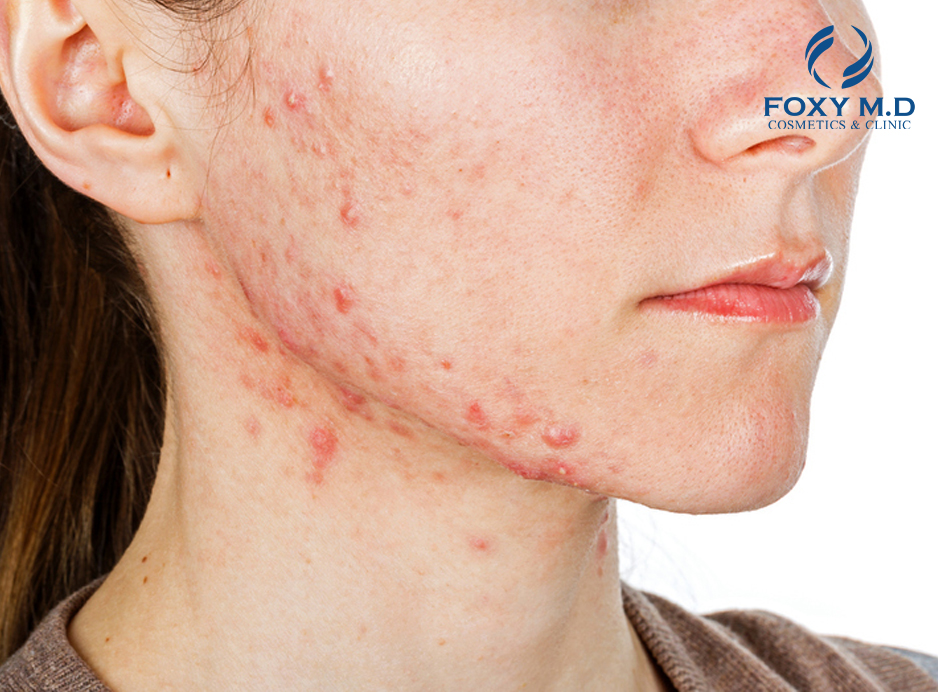
When acne forms on the chin, it’s often deep cystic acne or nodules rather than shallow whiteheads. These lesions sit deep under the skin, causing widespread inflammation.
So if you only apply topical products, they may work on the surface—but the core inflammation and clogged material underneath can remain, waiting for a trigger (like staying up late or eating spicy foods) to flare again.
Also, the chin area constantly moves (talking, eating). That frequent motion can irritate inflamed acne, slow healing, and spread inflammation to nearby areas.
According to face mapping concepts, the chin is sometimes linked to reproductive and excretory health. So internal issues involving hormones, ovaries, or related systems may “send signals” through chin breakouts.
Effective and Safe Solutions for Chin Acne
Now that we understand the causes—how do we finally “send chin acne away for good”? Here are methods ranging from basic home care to more advanced clinic treatments.
Keep in mind: chin acne treatment takes consistency—it won’t disappear overnight.
1) Improve Your Skincare Routine
The first and most important step is cleansing. Use double cleansing (makeup remover + cleanser) every night—even if you don’t wear makeup.
This removes sunscreen, dirt, and excess oil thoroughly. Choose a gentle cleanser with balanced pH (around 5.0–6.0) and ingredients like Salicylic Acid (BHA) to help clean pores.
Use targeted active ingredients such as:
-
Benzoyl Peroxide
-
Retinol
-
Azelaic Acid
These help reduce inflammation, fight C. acnes, and dry out pimples faster.
However, use them carefully and moisturize well to avoid irritation or peeling. And don’t forget sunscreen during the day—UV exposure worsens post-acne marks and pigmentation.
2) Adjust Your Lifestyle and Diet
Try reducing sugar and cow’s milk for just 2 weeks—you may be surprised by the improvement.
Instead, eat more vegetables and fruits rich in Vitamin C, add zinc, and drink about 2 liters of water daily.
Good sleep and stress control are also “skin medicine.” Make sure to regularly wash pillowcases, bedding, clean your phone, and wash reusable masks frequently.
3) Professional Treatments at a Clinic/Spa
If you have deep cystic acne, swollen nodules, and frequent recurrence, home care may not be strong enough. This is when dermatology support becomes important.
Modern clinical options include:
-
Medical-grade comedone extraction (safe pimple extraction)
-
Blue light therapy (targets acne-causing bacteria)
-
Chemical peels (remove dead skin cells and unclog pores)
-
IPL or Laser treatments (oil control, inflammation reduction, fading dark marks)
At reputable clinics such as Foxy M.D Cosmetics & Clinic, doctors can analyze your skin and create a personalized plan combining multiple methods—addressing the mechanism behind recurring chin acne more thoroughly.
How Much Does Chin Acne Treatment Cost?
This is definitely a common concern. In reality, there isn’t one fixed price because every skin condition is different.
Typically, a single session or a full chin acne treatment plan may range from a few hundred thousand to several million VND, depending on:
-
Severity: mild blackheads vs. deep cystic acne
-
Methods used: extraction alone vs. peel + light therapy + laser
-
Clinic reputation and professional skill: dermatologist-led medical clinics cost more, but safety and results are far more reliable
-
Supporting products: oral or topical medications recommended for home use
My advice: don’t chase “shockingly cheap” package deals or unverified treatments like mixed creams or herbal alcohol remedies. Skin damage can be severe—and fixing it later often costs 10 times more.
Frequently Asked Questions (FAQ)
Should I pop chin pimples myself?
Absolutely not. The chin has many nerves and blood vessels. Popping pimples with unclean hands or before they’re ready can cause infection and increase scarring risk. Uneven pressure can also damage skin structure, leading to permanent pitted scars.
Is chin acne related to gynecological problems?
Chin acne can be linked to hormonal/reproductive imbalance. If you also have irregular periods, severe cramps, unexplained weight gain, or excess hair growth, consider checking hormone levels or screening for PCOS.
Can toothpaste treat chin acne?
This is a popular myth, but it’s not supported scientifically. Toothpaste may contain antibacterial agents like triclosan, but it also contains detergents, fragrance, and menthol that can irritate facial skin—causing burns, hardening, and darker marks.
How long until chin acne fully improves?
It depends on your body and treatment method. Skin cell turnover averages 28–30 days, so you should stay consistent for at least 1–3 months to see clear improvement and reduce recurrence. Don’t switch products too often.
Conclusion
Understanding why chin acne keeps coming back is the first and most important step in building an effective strategy to control it. Chin acne may be stubborn, but it’s absolutely manageable when you combine external care with internal balance.
Remember: your skin reflects your overall health. Listen to your skin, improve your lifestyle, and choose scientifically proven skincare methods.
Don’t let recurring chin acne steal your confidence and radiant smile. If you’re unsure where to start—or if your acne is severe—seek help from dermatology professionals for a personalized plan.
At reputable places like Foxy M.D Cosmetics & Clinic, with experienced professionals and medical-standard protocols, you can treat chin acne safely and effectively.
Wishing you smooth, healthy, beautiful skin soon! ✨