
Lượt xem: 4.015
Is Treating Atrophic Acne Scars with CO2 Laser Effective? A Complete A–Z Guide
Hi everyone, I’m the admin of a dermatology knowledge column.
I’m sure many of us who have gone through an “acne war” period carry a lingering obsession called atrophic acne scars (pitted scars).
These scars aren’t just marks on the skin—they can also become a huge psychological barrier, making many people lose confidence in daily communication.
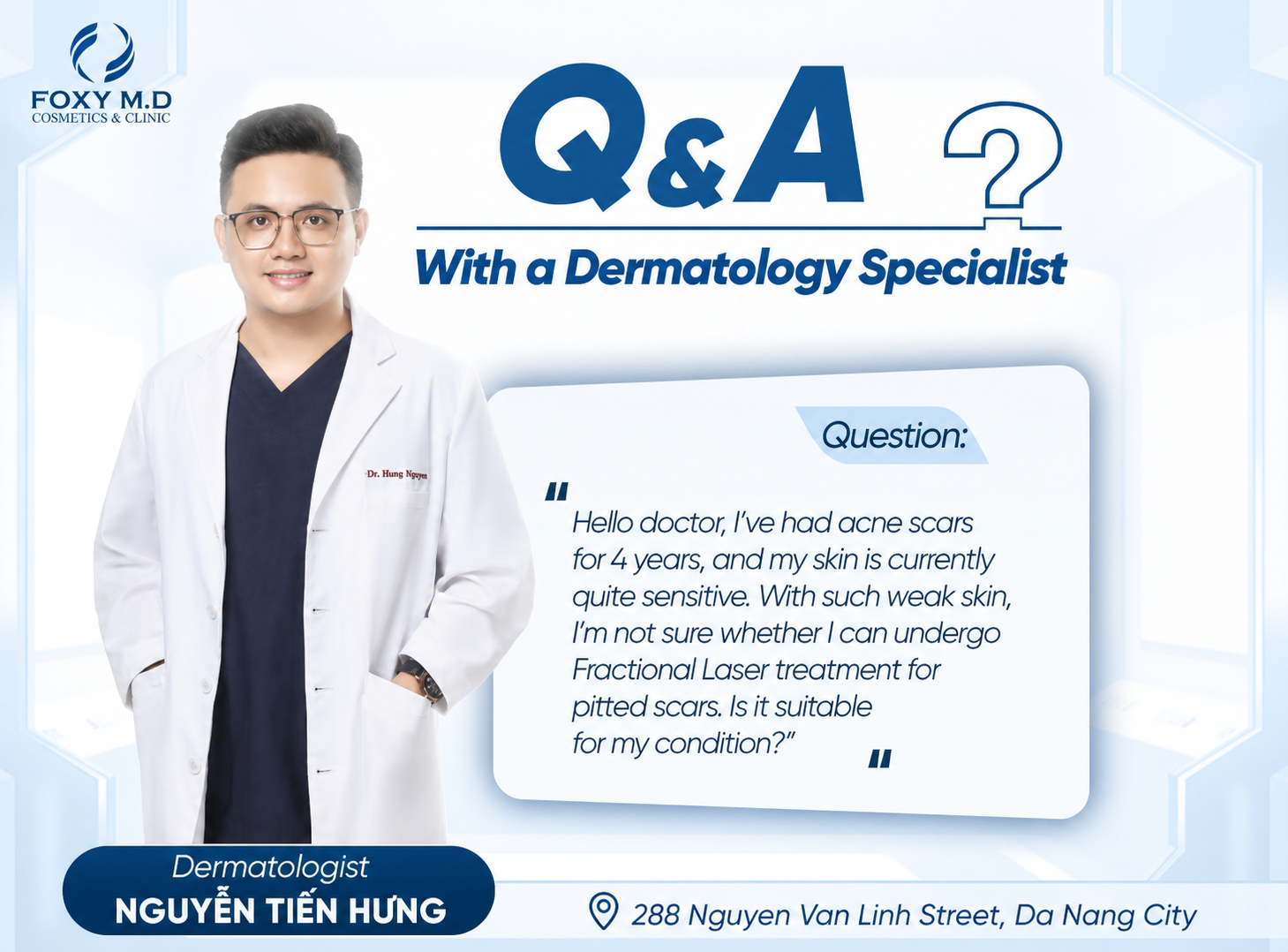
Recently, I’ve received many questions, including one from a client sent to Dr. Nguyen Tien Hung:
“Hello doctor, I’ve had acne scars for 4 years, and my skin is quite sensitive. With such a weak skin barrier, can I use Fractional Laser to treat my scars?”
To answer that question—and to help you understand whether CO2 laser treatment for acne scars is truly effective—I’ve compiled the complete, in-depth information below.
Let’s dive in!
How Fractional CO2 Laser Works to Treat Atrophic Scars
To know whether a method works, we first need to understand how the “weapon” operates.
Fractional CO2 laser is considered the gold standard worldwide for atrophic scar treatment.
This technology uses a laser wavelength of 10,600 nm, delivering energy deep into the dermis without excessive invasiveness.
Unlike older lasers that burn off the entire skin surface, Fractional CO2 splits the laser beam into thousands of tiny microbeams (micro-dots).
These microbeams create extremely small “thermal injury columns,” surrounded by healthy, untouched skin.
This fractional mechanism is the key reason why the question “Is CO2 laser scar treatment effective?” often has a positive answer.
When the laser heat reaches the dermis, it breaks down tough fibrotic scar tissue at the base of scars.
At the same time, the heat triggers the body’s natural wound-healing response.
Your body “recognizes” that the area needs repair, so it boosts collagen and elastin production to fill in the depressed areas.
This process not only raises scars but also improves overall texture and skin tone.
Because healthy skin remains between treatment zones, recovery is significantly faster than traditional fully ablative resurfacing lasers.
So, Is CO2 Laser Treatment for Acne Scars Really Effective?
This is the most important part—and the one I want to share to help ease your worries.
Based on numerous scientific studies and clinical experience, the answer is: YES, but the level of improvement depends on multiple factors.
For long-standing scars (like the 4-year case above), the scar structure is often fibrotic, hardened, and tightly tethered under the skin.
Fractional CO2 laser is especially effective at breaking these deep fibrous bonds—something topical creams cannot do.
Statistics show that after a proper medical-grade treatment course, scars may improve by 50% to 80%, depending on your skin’s response.
CO2 laser results are particularly noticeable for:
-
Ice pick scars
-
Boxcar scars
However, to achieve maximum results, you need to understand that this is a process requiring patience—it’s not an instant “one-session miracle.”
A standard course typically includes 3–5 sessions, spaced 4–6 weeks apart, giving the skin time to regenerate.
In addition to scar improvement, CO2 laser often provides “double benefits” such as pore tightening and overall skin rejuvenation.
Many people notice that after treatment, their skin looks brighter and more plump thanks to new collagen production.
So if you’re wondering whether CO2 laser is worth it for atrophic scars—this is absolutely one of the best investments available today.
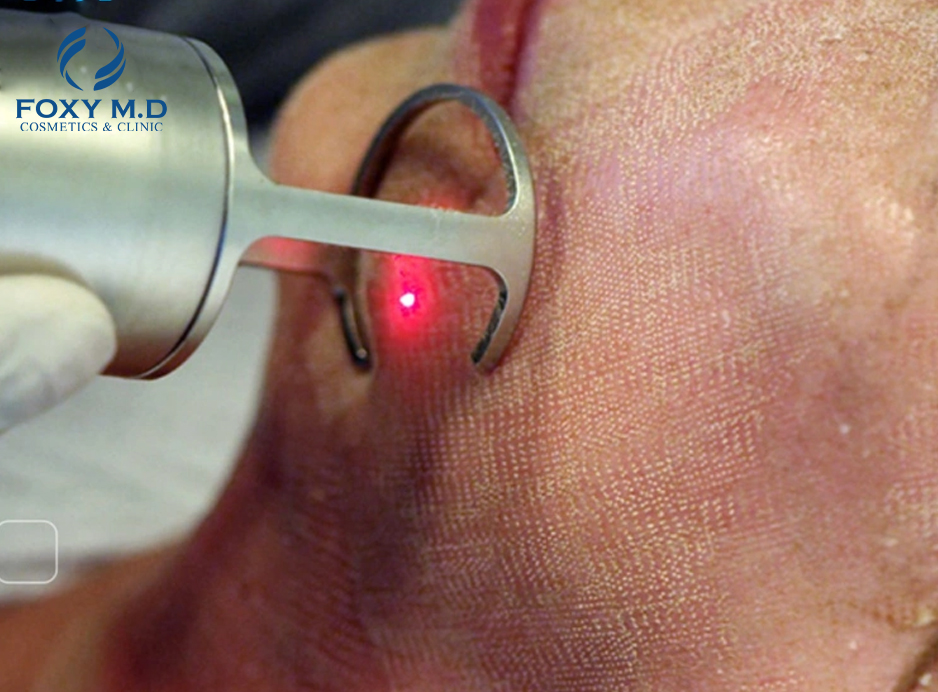
Can Sensitive Skin and Old Scars Still Be Treated with CO2 Laser?
Now back to the client’s question for Dr. Hung:
“I’ve had scars for 4 years and sensitive skin—can I still do laser?”
This is a very real concern, especially for people with thin, weakened skin due to overuse of harsh acne treatments or unsafe products.
The good news: Fractional CO2 laser CAN be used on sensitive skin, but it requires a personalized protocol.
With sensitive skin, doctors won’t use high energy from the first session.
Instead, they adjust the laser’s settings (energy and density) more gently, allowing your skin to adapt gradually.
At reputable clinics like Foxy M.D, you will be carefully examined before treatment to assess sensitivity and skin barrier strength.
If the skin is too weak or inflamed, the doctor may recommend repairing the skin first using methods like mesotherapy or electroporation (nutrient infusion).
Once the skin barrier is stronger, scar treatment with laser can begin more safely.
For 4-year scars, the tethering is often stable and fibrotic, so combining Fractional CO2 laser + subcision is commonly recommended for better results.
Laser improves surface remodeling, while subcision cuts the fibrous bands pulling the skin downward.
This combination helps scars fill faster and reduces the chance of scars becoming depressed again later.
So if you have sensitive skin—don’t panic. The key is choosing a skilled doctor who can tailor the settings to you.
What Affects the Cost of CO2 Laser Scar Treatment?
Alongside “Does it work?”, the “cost question” is also a big one.
Scar treatment pricing varies widely and there’s no fixed number.
On average, costs typically range from 2,000,000 VND to 5,000,000 VND per session, depending on multiple factors:
-
Your scar condition: severity, scar type, how long you’ve had it, and the size of the treatment area
-
Technology and machine quality: newer authentic CO2 laser systems deliver more stable energy, reduce pain, and minimize side effects compared to cheap outdated machines
-
The practitioner’s skill (most important): laser treatment is not just “point and shoot”—it requires expert customization based on different facial zones
-
Post-treatment products: aftercare creams and recovery serums may be included
Be cautious of shockingly cheap scar treatments advertised for only a few hundred thousand VND. Poor technique can lead to pigmentation, worsened scarring, or “scars on top of scars.”
What Does a Medical-Standard CO2 Laser Scar Treatment Session Look Like?
Here’s what a typical session should look like in a proper medical setting:
Step 1: Skin examination & diagnosis
The doctor identifies scar type (ice pick, boxcar, rolling) and evaluates skin condition.
Step 2: Makeup removal & cleansing
Removes oil, dirt, sunscreen—so the laser penetrates properly.
Step 3: Numbing cream application
Usually 45–60 minutes to reduce pain.
Step 4: Disinfection & CO2 laser treatment
The doctor sets the parameters and performs the laser. You’ll feel mild stinging and warmth, but it’s tolerable.
Step 5: Cooling (cold air spray / cold compress)
Soothes the skin immediately and reduces redness and burning sensation.
Step 6: Applying recovery boosters
Such as PRP, PDRN, or growth-factor serums to accelerate healing.
Step 7: Homecare instructions
This determines about 50% of success—proper skincare, medication, and sun protection are critical.
Aftercare Guide: How to Maximize Results After CO2 Laser
Many people ask “Does CO2 laser work?” but forget that aftercare is the deciding factor.
After laser, your skin is in an “open” and highly sensitive state.
First 24 hours:
-
Do not use harsh cleansers
-
Clean gently with sterile saline
-
Pat dry with clean cotton pads
Day 2 to Day 7:
-
Skin forms small brown scabs
-
You may feel tightness and itching (a sign of healing and collagen building)
-
Do NOT pick or peel scabs—peeling early causes dark marks and new scars
Moisturizing is essential. Use recovery creams containing:
-
B5 (Panthenol)
-
Hyaluronic Acid
-
Vitamin E
Sun protection is mandatory. UV is the #1 enemy of healing skin. Without protection, you risk post-inflammatory hyperpigmentation.
Diet-wise, many people also avoid foods believed to increase itching or abnormal scarring for the first 2 weeks, such as water spinach, beef, seafood, sticky rice dishes.
Drink more water and consider Vitamin C supplementation to support collagen formation.
Frequently Asked Questions
1. Does CO2 laser scar treatment hurt?
With 45–60 minutes of numbing, pain is minimized. During treatment, you’ll feel mild stinging and warmth.
2. When will I see results?
After 2–3 weeks (once scabs are fully gone), you’ll notice gradual improvement. Stronger results often appear after the 2nd or 3rd session.
3. Can I treat scars if I still have active acne?
Not recommended. If you have inflamed or pus-filled acne, doctors usually treat the acne first to prevent spreading bacteria during laser.
4. How long is downtime?
You usually don’t need to take time off work, but redness and scabbing can last about 5–7 days. You can live normally, but must protect your skin carefully outdoors.
Conclusion
So, is CO2 laser treatment for atrophic acne scars effective?
Yes—this is currently one of the most scientific and effective solutions available to “fill in” deep pitted scars.
But the results don’t come from magic. They come from the combination of:
-
Advanced technology
-
A skilled doctor
-
Your strict aftercare routine
Especially for sensitive skin like the case sent to Dr. Hung, choosing a reputable clinic with a dermatologist directly assessing and performing treatment is the key to safety.
Don’t let atrophic scars steal your confidence for another day.
Understand your skin, choose the right method, and stay consistent—your smoother skin is absolutely possible.
If you have more questions about your scar condition, don’t hesitate to seek advice from dermatology experts.
Wishing you the glowing skin you deserve! ✨