Lượt xem: 4.015

Not only does it cause pain and swelling that seriously affects appearance, cystic acne (acne nodules) is also one of the leading causes of permanent atrophic scars (pitted scars) if it isn’t treated correctly. Have you ever wondered why two people can have acne—yet one person’s skin becomes smooth again after treatment, while the other ends up with stubborn dark marks and scars?
The answer lies in the treatment method and the timing of intervention.
Today, I’m going to share everything you need to know about how to treat cystic acne without leaving scars, based on scientific principles and real-world experience. We’ll go step by step—from truly understanding your “enemy,” to applying the most modern technologies available today to eliminate it safely.
Before learning how to defeat it, we need to understand what cystic acne actually is. Unlike blackheads or whiteheads that sit near the surface, cystic acne is a severe form of acne.
It involves deep inflammation that reaches the dermis (the deeper layer of skin). When pores become completely blocked with excess oil, dead skin cells, and debris, Cutibacterium acnes (C. acnes) multiplies rapidly.
Your body responds by sending white blood cells to fight the bacteria—creating a large, swollen, red, painful lesion filled with pus underneath.
.png)
Cystic acne is more likely to leave scars because this deep inflammatory process damages collagen and elastin in the dermis.
If the body doesn’t produce enough collagen to fill the “gap,” pitted scars form.
If the body produces too much collagen, raised scars (hypertrophic/keloid scars) may appear.
That’s why the key to treating cystic acne without scars is this:
✅ Control inflammation early
✅ Minimize damage to surrounding tissue
Why does cystic acne keep coming back? Identifying the cause helps you cut off the root of the problem.
This is the most common cause—especially during puberty, pregnancy, or perimenopause. Increased androgen hormones stimulate oil glands to produce more sebum, creating an ideal environment for acne bacteria.
Late nights, spicy foods, greasy foods, and especially sugary foods and drinks (milk tea, sweets) can trigger acne flare-ups. Sugar and dairy may increase insulin levels, which can indirectly increase sebum production.
Not removing makeup properly, or washing your face too often (stripping the barrier), can weaken your skin and make it more vulnerable. Touching your face and squeezing pimples also pushes bacteria deeper into pores.
When you’re stressed, your body releases cortisol. This hormone can increase oil production and worsen inflammation, making acne more severe.
When cystic acne appears, most people immediately try to “handle it” at home. But the difference between proper care and skin damage is very thin.
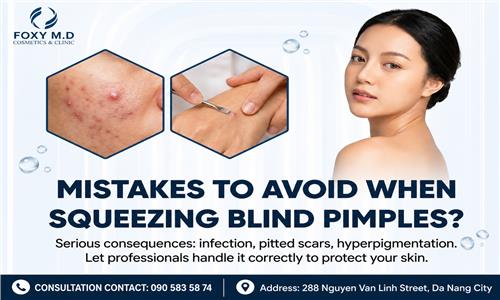
First, never squeeze or pop cystic acne when it’s swollen, red, and painful. Pressing with fingers or extraction tools can rupture the follicle underneath, spreading pus and bacteria into surrounding healthy tissue.
Second, avoid unknown acne creams, mixed “magic” creams, alcohol-based homemade tonics, or products without clear origin. They may flatten acne quickly at first, but they often thin the skin, cause broken capillaries, and trigger a severe rebound breakout later.
Third, do not apply hot compresses to cystic acne. Heat dilates blood vessels and can increase swelling and inflammation.
Cleanse gently using a mild cleanser with a balanced pH (around 5.5). Use targeted spot treatments containing:
Benzoyl Peroxide (kills C. acnes bacteria and dries the lesion)
Salicylic Acid (BHA) (helps unclog pores and reduce inflammation)
Only apply these products directly on the acne spot—don’t spread it over healthy skin to avoid irritation or dryness.
Using hydrocolloid pimple patches can also help protect the lesion from dirt and your hands, and may absorb minor fluid.
If your cystic acne is persistent, large, painful, or spreading, home methods may not be enough. In that case, the most effective way to treat cystic acne without scars is to seek medical-grade treatment at a reputable clinic.
At Foxy M.D Cosmetics & Clinic, cystic acne protocols are designed with medical standards and combine multiple approaches to eliminate inflammation safely.
Laser/light technologies such as IPL or E-light can penetrate the skin to destroy C. acnes bacteria without damaging the surface. Thermal energy also helps dry out lesions faster, reduce oil production, and stimulate collagen production—helping prevent pitted scarring from the inflammatory stage.
This method injects anti-inflammatory and keratolytic ingredients directly into affected areas. Acne mesotherapy cocktails often contain Retinol, Salicylic Acid, Vitamin B complexes, etc., helping reduce swelling and pain quickly—sometimes within 24 hours—and preventing post-acne pigmentation.
Unlike at-home popping, extractions at Foxy M.D are performed in a sterile environment. Specialists use professional tools to remove mature acne contents (when ready) without damaging surrounding tissue. Completely clearing the inflamed content is essential for faster healing and scar prevention.
Beyond procedures, doctors guide you through a proper homecare plan and prescribe suitable cosmeceuticals to restore the skin barrier. Combining in-clinic treatment with homecare creates sustainable results and reduces recurrence.
Here is a typical treatment flow at Foxy M.D. A session usually lasts about 60–90 minutes, depending on your condition.
Step 1: Skin analysis & consultation
The doctor assesses acne severity, skin type, and medical history to personalize your plan.
Step 2: Deep cleansing
Makeup removal, cleansing, and gentle exfoliation to clear the pores.
Step 3: Steam & sebum suction
Softens the skin and opens pores to make extraction safer.
Step 4: Sterilization & extraction
Only mature lesions are extracted; inflamed active lesions are not forcefully squeezed.
Step 5: High-frequency (violet light)
Disinfects extraction sites, dries the wound surface, and reduces swelling.
Step 6: Intensive treatment (Laser / Meso / Peel)
Depending on the plan, the doctor may apply bacterial-killing laser/light therapy, acne mesotherapy, or medical peeling.
Step 7: Mask + LED phototherapy
Blue light kills acne bacteria
Red light calms inflammation and stimulates collagen production
Many people ask: “How much does a scar-free cystic acne treatment plan cost?”
There is no one fixed number—because it depends on:
A few localized cystic lesions cost less than full-face cystic acne, acne conglobata, or tunneling acne.
Basic care (extraction + mask) is cheaper than advanced protocols combining laser, mesotherapy, and chemical peels. However, high-tech approaches can reduce treatment time and significantly lower scarring risk.
A full acne course typically lasts 1–3 months. Staying consistent can actually save you money—stopping midway often leads to recurrence and restarting from scratch.
In Da Nang, medical-grade acne treatment typically ranges from a few hundred thousand VND to a few million VND per session, depending on clinic quality and doctor expertise.
“Treat from the inside and outside” is a golden rule.
Zinc-rich foods (pumpkin seeds, oysters, whole grains) to regulate oil and reduce inflammation
Vitamin C (oranges, guava, kiwi) and Vitamin A (carrots, sweet potatoes) to support immunity and skin regeneration
Drink 2–2.5 liters of water daily to support detoxification
Refined sugar, sweets, soda
Dairy milk and dairy products (may contain hormones that trigger acne in some people)
Spicy, oily foods and fast food
Sleep early (before 11 PM) and get enough rest
Wash pillowcases and bedding regularly (at least once a week)
Manage stress as much as possible
Hard acne often means the contents are deep and trapped. Do not squeeze it at home. A clinic may use anti-fibrotic injections or laser to break down the capsule and help the acne come to a head for safe removal.
Absolutely NO. Toothpaste contains harsh agents and menthol that can burn or irritate skin, worsen inflammation, and leave darker marks.
It depends on your case, but typically after 2–4 weeks of consistent treatment, inflammation can reduce by 70–80%. For clear skin and fading marks, a full course often takes 2–3 months.
When acne is inflamed, avoid high-strength Vitamin C—it can irritate. Focus on calming and drying the inflammation first. Once the acne is flat and healing, that’s the ideal time to start Vitamin C for pigmentation.
Now you have a complete, science-based understanding of how to treat cystic acne without leaving scars. Acne treatment is a journey that requires patience, knowledge, and discipline. Don’t let impatience lead to mistakes that cause lifelong scarring.
Trust science, and choose reputable, doctor-led clinics like Foxy M.D Cosmetics & Clinic for safe and effective care. With advanced laser technology and personalized protocols, smooth skin is no longer an impossible dream.
If you’re struggling with cystic acne, contact the hotline 090 583 58 74 or visit 288 Nguyen Van Linh street, Da Nang City. for a free consultation.
Wishing you success in defeating acne and feeling confident and radiant every day. Thank you for reading!