Lượt xem: 4.015

If you often scroll through social media or follow beauty forums, then the phrase “glowy, dewy skin” or “Glass Skin” is definitely nothing new, right?
It’s the kind of skin that looks deeply hydrated, reflects light like a mirror, has nearly invisible pores, and appears flawlessly smooth.
To reach that level, applying moisturizer alone usually isn’t enough—we need a method that delivers nutrients deeper into the skin.
And the name mentioned most often—considered the “golden key” to ageless skin—is Mesotherapy.
However, in the middle of countless promotional claims, I’ve noticed many people are still confused and keep asking me:
“What is mesotherapy for glass skin? Is it really as magical as people say?”
Some even mix up mesotherapy with filler injections, or worry about complications like granulomas that sometimes appear in the news.
Today, I’m going to break everything down in the most scientific and objective way possible—so you can understand the method clearly and make a smart, informed beauty decision.
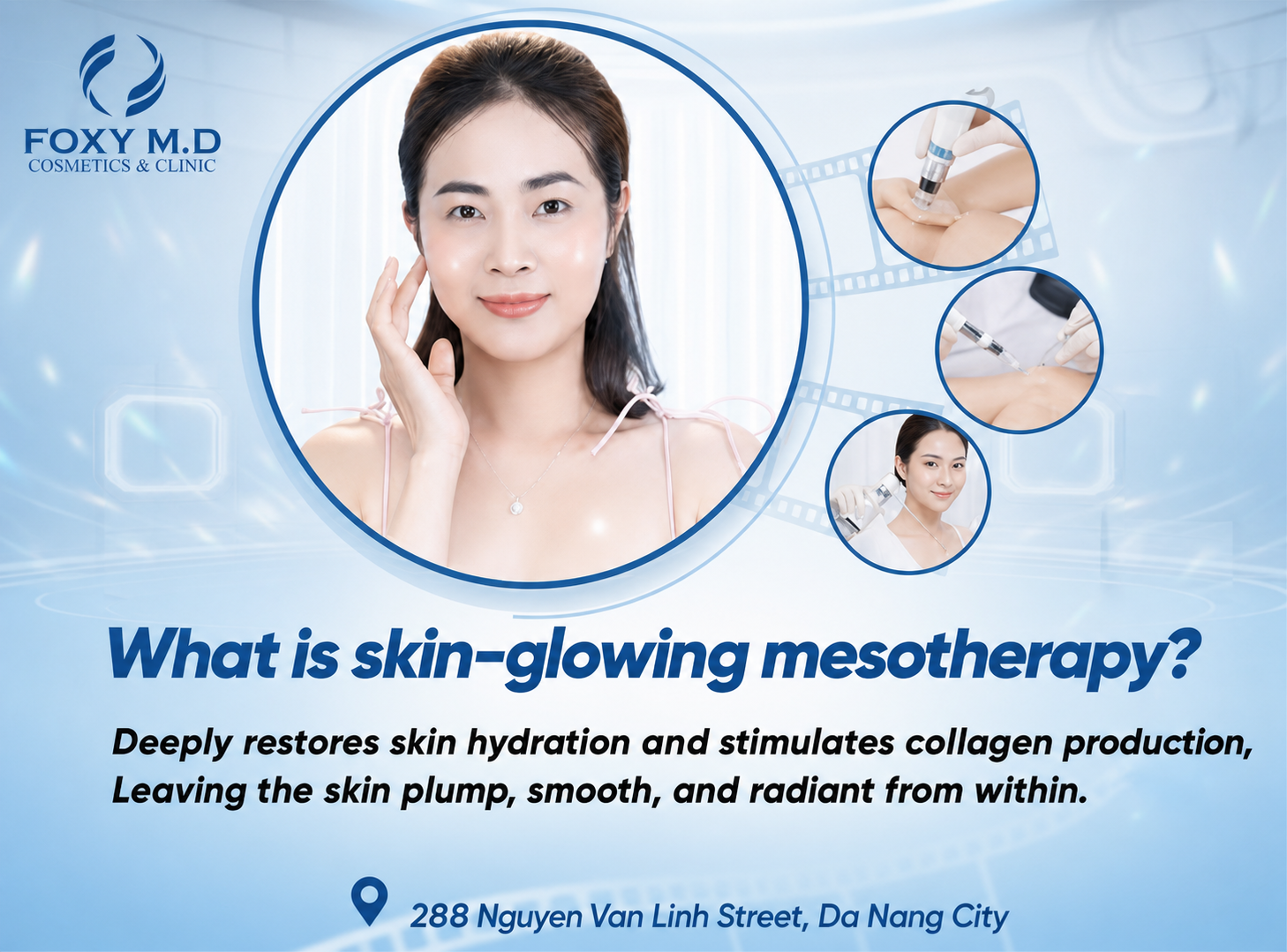
First, let’s clarify what Mesotherapy actually means.
Mesotherapy is not the name of a specific drug or serum.
It is the name of a technique—a minimally invasive procedure developed by French doctor Michel Pistor in 1952.
Its principle is simple but powerful: deliver active ingredients exactly where they’re needed.
Normally, when we apply serums or creams, the ingredients must fight to penetrate the thick outer skin barrier (the stratum corneum).
That’s why real absorption is often very low—only around 5–10%—and results can be slow.
So, what does glass skin mesotherapy mean in this context?
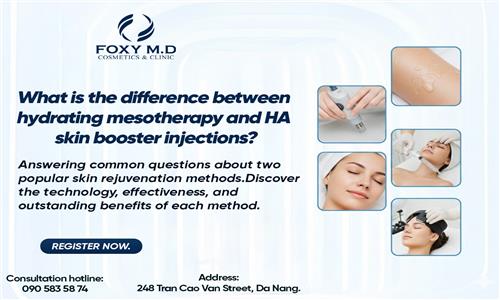
It means using tiny micro-needles to create micro-channels and inject a concentrated nutrient “cocktail” directly into the dermis.
The dermis is where collagen, elastin, and Hyaluronic Acid (HA) are found—key elements responsible for skin firmness, elasticity, and deep hydration.
By supplying nutrients directly to this “target zone,” the concentration of active ingredients can be dozens—even hundreds of times higher than topical skincare.
As a result, your skin essentially “drinks water” and “feeds on nutrients” immediately, helping skin cells revive—creating that plump, dewy, glassy glow people love.
This method deeply hydrates, stimulates collagen production, and improves skin texture and radiance from within.
Now that you understand the technique—what exactly gets injected into the skin to create that glow?
This is the most important factor affecting results, and it’s also what separates high-quality treatments (like those at Foxy M.D) from lower-grade services.
The key “star ingredient” in most glass skin mesotherapy treatments is Hyaluronic Acid (HA).
HA is a sugar molecule naturally found in the body, famous for its water-binding ability:
1 gram of HA can hold up to 6 liters of water.
When non-crosslinked (liquid) HA is injected into the dermis, it works like a sponge—absorbing water and plumping the skin cells.
This deep hydration is what creates the light-reflecting surface that makes skin look glossy, bouncy, and radiant.
To enhance anti-aging and skin health, doctors often combine HA with other ingredients to form a customized “cocktail,” such as:
Vitamins & minerals: Vitamin C (brightening, antioxidant), Vitamin A (anti-aging), Vitamin E (moisturizing), and B vitamins (skin resilience)
Amino acids & peptides: building materials that support collagen and elastin synthesis
Coenzymes & nucleic acids: energy support for cellular repair and regeneration
Growth factors: help repair damaged cells and stimulate healthier tissue rebuilding
Depending on your skin condition (dryness, aging, dullness, pigmentation, etc.), the doctor will select or tailor the most suitable formula.
So the answer to “What is glass skin mesotherapy?” is not just hydration—it’s full-spectrum skin nourishment.
Many people wonder why one meso session can do more than a year of creams.
The secret lies in two mechanisms working at the same time:
By delivering HA and nutrients directly into the dermis, mesotherapy replaces depleted HA caused by aging and environmental stress.
Skin becomes deeply hydrated immediately, cells swell with water, and fine dehydration lines soften.
At the same time, collagen-stimulating ingredients help improve firmness and elasticity over the following weeks.
Don’t panic at the word “needles.”
The micro-needles create tiny, controlled micro-injuries. Your body recognizes these as “damage signals” and triggers natural wound-healing processes.
That healing response stimulates new collagen and elastin production, improving skin texture and strength over time.
This combination of external nutrients + internal regeneration is why results can look dramatic.
Mesotherapy is relatively “friendly” and can benefit many skin types—but it’s most effective for:
Severely dehydrated, rough skin
Dry, flaky texture; makeup looks cakey or patchy.
Early signs of aging (often from age 25+)
Fine lines around the eyes/mouth, reduced bounce.
Dull, tired-looking skin
From stress, late nights, blue light, pollution.
Oily skin caused by dehydration
Some oily skin is actually lacking water—meso helps balance oil-water levels and can improve pore appearance.
Skin recovery needs
Weak, sensitive skin or post-acne/laser skin needing rebuilding support.
Active, severe inflammatory acne (nodules/cysts) — treat acne first
Pregnancy or breastfeeding (consult a doctor; usually postponed)
Bleeding disorders or use of blood thinners
To reduce risks like infection or granulomas, the procedure must be performed under strict medical conditions.
At Foxy M.D Cosmetics & Clinic, the process is standardized as follows:
Step 1: Consultation & skin analysis (1:1)
The doctor evaluates hydration levels, aging signs, and skin quality, then chooses the best formula.
Step 2: Deep cleansing
Makeup removal and gentle cleansing with medical-grade skincare.
Step 3: Numbing
High-quality numbing cream is applied for 30–45 minutes to keep you comfortable.
Step 4: Disinfection & injection
The doctor removes numbing cream and disinfects thoroughly (povidone-iodine or 70% alcohol).
Ultra-fine needles (e.g., 34G) are used. Injection techniques may include micro-injections (nappage) or small papules, depending on the product.
Step 5: Cooling infusion & recovery mask
Cooling therapy calms redness, reduces swelling, and helps “lock in” hydration.
Step 6: LED light therapy
Red LED is often used to reduce inflammation and stimulate collagen.
Step 7: Aftercare guidance
You’ll receive detailed instructions for home care to maximize results.
Cost varies widely—from a few hundred thousand to many millions of VND.
The difference mainly depends on:
Product quality
Premium European brands (Switzerland/Spain/France/Italy) are purer and safer—often more expensive. Cheap unknown products may carry higher risks.
Doctor expertise
Correct depth, dosing, and technique matter. You’re paying for safety and precision—not just the “serum.”
Clinic standards
Sterile environment, single-use supplies, and supportive equipment affect pricing.
In Da Nang, medical-standard glass skin mesotherapy commonly ranges from 2,000,000 to 8,000,000 VND per session, and higher for premium boosters.
Avoid “500k meso” or vague “nano whitening injections”—these are often not true mesotherapy or may involve unsafe products.
After mesotherapy, your skin needs gentle care:
Do not wash your face with tap water or cleanser
Only wipe gently with saline or cooled boiled water
No makeup, no skincare products, no sunscreen on the first day (to reduce infection risk)
Use gentle moisturizer and repair products (B5, HA, ceramides)
Sunscreen is mandatory—UV exposure can cause pigmentation and weaken results
Drink plenty of water (2–3 liters/day) so HA can hydrate properly
Avoid sauna, facial massage, and heavy sweating workouts for 3–5 days
Eat fruits and vegetables; limit alcohol and stimulants to reduce swelling
1) Does mesotherapy hurt?
With proper numbing and ultra-fine needles, discomfort is minimal—usually described as light stinging.
2) Will my skin feel bumpy afterward?
Small bumps/papules can appear. This is normal and usually settles within 1–2 days (liquid HA) or a few days for thicker boosters.
3) When will I see results?
Many people notice glow and hydration within 3–5 days, and the best look often appears around 1 week.
4) How often should I do it?
A typical initial course is 3–5 sessions, spaced 2–3 weeks apart. Maintenance is usually every 2–3 months, depending on skin needs.
5) Is mesotherapy addictive?
No. If you stop, your skin returns to its natural aging process—not worse than before.
So, what is glass skin mesotherapy?
It’s a science-based, minimally invasive method that delivers hydration and regenerative nutrients directly into the dermis—helping you achieve plumper, brighter, smoother, more radiant skin without surgery or major downtime.
The key is choosing a reputable medical clinic and ensuring the treatment is performed by a qualified doctor using transparent, authentic products.
If you’re in Da Nang and aiming for true Korean-style glass skin, you can visit Foxy M.D Cosmetics & Clinic (288 Nguyen Van Linh street, Da Nang City ) for skin analysis and a personalized mesotherapy plan designed for your skin’s exact needs.