Lượt xem: 4.014

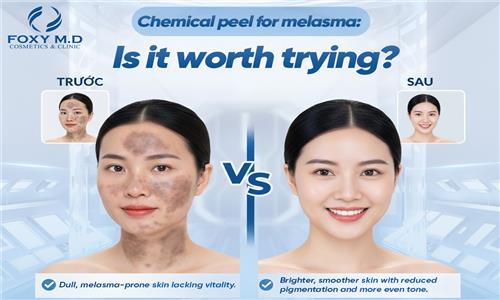
On the journey to brighter, clearer skin, you’ve probably heard a lot about two “miracle” treatments: Mesotherapy injections (Meso) and Chemical Peels (skin resurfacing / bio-revitalizing peel).
But the truth is, many people are still confused and don’t really understand how meso for melasma differs from a chemical peel.
Are they the same? Which one works better for melasma? Or should you combine both?
Today, as someone passionate about dermatology research—and after studying the services at Foxy M.D Cosmetics & Clinic carefully—I’m going to break it down clearly. Let’s peel back the layers (pun intended) and get the most accurate answer together.
Before comparing them, we need to understand what each method truly is. Don’t let flashy marketing confuse you—let’s focus on the science.
A chemical peel (also called biological skin resurfacing) uses chemical solutions—typically acids such as AHA, BHA, TCA, Retinol, etc.—to act on the skin’s surface.
The goal is to remove old, rough dead skin cells and superficial melasma pigment located mainly in the epidermis.
Imagine your melasma-prone skin as a wall covered in mold and stains.
A peel is like using a scrub or cleanser to remove the outer layer. Once the old layer sheds, the fresher skin underneath appears—brighter, smoother, and more even-toned.
Unlike peels, mesotherapy doesn’t focus on surface exfoliation. It targets deeper layers.
Mesotherapy is a micro-injection technique that uses tiny needles to deliver melasma-fighting ingredients (such as Tranexamic Acid, Glutathione, Vitamin C, etc.) into the dermis.
If a peel is “treating the surface,” mesotherapy is more like “treating the root.”
By delivering active ingredients deeper into the skin, mesotherapy helps suppress melanin production and strengthens the skin from within—like fertilizing and watering a plant so it grows healthier from the roots up.
To make this easy to visualize, here’s a comparison based on 5 key criteria: mechanism, depth, sensation, downtime, and results—summarized from dermatologist insights at Foxy M.D.
.png)
Chemical Peel:
Works through controlled exfoliation. Acids break bonds between dead skin cells and pigment-loaded cells on the surface, speeding up natural skin turnover. This helps fade superficial melasma, freckles, and sun spots, and mildly stimulates collagen renewal.
Meso for Melasma:
Works through suppression + nourishment. Tranexamic Acid helps inhibit tyrosinase, the key enzyme involved in melanin production, reducing new pigment formation. Glutathione and Vitamin C help brighten and shift darker pigment toward a lighter tone. Growth factors can also help repair the skin barrier, making the skin stronger and more resilient.
Chemical Peel:
Primarily targets the epidermis, and sometimes the upper dermis (medium/deep peels). It’s highly effective for epidermal melasma, surface discoloration, and freckles. But for deep dermal melasma, a peel may be less effective—unless done very deeply (which carries higher risk).
Meso for Melasma:
Targets the dermis directly, where deeper pigment activity and vascular support for melasma may exist. That’s why mesotherapy can be helpful for harder cases such as hormonal melasma, deeper melasma, and redness/visible capillaries, where topical treatments and peels often struggle.
Chemical Peel:
You may feel stinging, tingling, and warmth/burning while the acid is on the skin. The intensity depends on the type and strength of the peel, but the sensation usually lasts only a few minutes during the procedure.
Meso for Melasma:
Since needles are involved, you may feel tiny pricks, like light ant bites. However, at Foxy M.D, numbing cream is typically applied for 20–30 minutes, making the procedure much more comfortable and generally well tolerated.
Chemical Peel:
After a peel, skin often looks red and may appear temporarily darker in the first few days. Around days 3–5, peeling/flaking begins—sometimes light, sometimes in sheets depending on depth. You’ll need strict sun protection and should avoid heavy makeup during the peeling phase.
Meso for Melasma:
Often called a “lunch-break beauty treatment.” After mesotherapy, you may see tiny bumps or small needle marks. These usually fade within 12–24 hours. Most people can return to normal work and daily life the next day without anyone noticing.
Chemical Peel:
Produces fast visible improvement. After peeling is complete (about a week), skin often looks brighter, smoother, and pores look tighter. However, without strict sun protection, post-peel skin can be more sun-sensitive and pigmentation may rebound (post-inflammatory hyperpigmentation).
Meso for Melasma:
Results tend to be slower but more stable. With each session, you may notice stronger skin hydration and gradual fading of pigment. Mesotherapy does not thin the skin like aggressive resurfacing might—many protocols actually aim to strengthen the skin barrier and improve skin quality over time.
After understanding the difference, you might ask: So which one should I do?
It depends on your skin condition and melasma type.
You have surface-level melasma, freckles, or sun spots
Your skin feels rough, thick, congested, with clogged pores or under-the-skin bumps
Your skin is relatively strong and not overly sensitive
You can follow strict aftercare and sun protection during the peeling phase
You want a faster improvement in skin tone and texture
You have deep melasma, mixed melasma, or long-term hormonal melasma
Your skin is thin, sensitive, red-prone, or has visible capillaries (and doesn’t tolerate acids well)
Your skin is dry, dehydrated, aging, or has fine lines
You have a busy schedule and don’t want visible peeling downtime
You want a treatment that combines pigment control with skin repair and rejuvenation
At advanced clinics like Foxy M.D, doctors often combine both in one personalized plan—for example:
Start with peels to remove surface pigment, then use mesotherapy to suppress deeper pigment activity and repair the skin barrier. This combination can create a “double effect.”
No matter which method you choose, safety and sterile technique are essential. Here’s the standard process:
1:1 consultation + skin scan
The most important step. Doctors assess melasma depth and decide whether you need peel, meso, or both.
Deep cleansing
Makeup removal, cleansing, and gentle exfoliation to improve absorption and even application.
Procedure (Peel or Meso)
If peel: The doctor applies acid and neutralizes precisely to avoid burns.
If meso: You’ll be numbed for 20–30 minutes, then the doctor injects targeted areas using a technique designed to reduce bruising and discomfort.
Cooling infusion + recovery mask
To calm the skin, reduce redness, hydrate, and support healing.
LED light therapy
Helps circulation, collagen stimulation, and faster recovery.
Many people ask: which is more expensive—peel or meso?
Typically, mesotherapy costs more per session than a peel.
Chemical peel: about 1,000,000 – 3,000,000 VND/session, depending on brand and peel strength.
Meso for melasma: about 2,000,000 – 6,000,000 VND/session or higher, depending on the injection cocktail (Tranexamic Acid, peptides, etc.) and the doctor’s expertise.
But don’t focus only on the price per session.
Some people need 5–7 peel sessions for surface pigmentation, while deep melasma may show clearer improvement after 3–5 meso sessions. The best approach is to let a doctor design the most effective and cost-efficient plan for you.
(Your original text mentions an “up to 40% off this month” offer—keep or adjust that detail based on your clinic’s real promotion schedule.)
Even the best doctor and the most advanced technology can’t override poor aftercare—especially with melasma. Aftercare accounts for up to 50% of results.
UV is the #1 trigger for melasma. After peel or meso, skin is more reactive.
Use broad-spectrum sunscreen SPF 50+ PA++++, reapply 2–3 times a day, even indoors.
After peels: skin can feel dry and itchy—use B5, HA, barrier repair moisturizers.
After meso: hydration supports skin recovery and helps actives perform better.
Do not peel off flakes manually. Let them shed naturally during cleansing—picking can cause bleeding, darker pigmentation, or scarring.
Drink water, eat vitamin-rich fruits and vegetables, avoid late nights, manage stress—hormonal fluctuations can worsen melasma.
Can I do a peel right after mesotherapy?
Not recommended in the same session (unless it’s a special doctor-designed protocol). Usually, wait about 2 weeks. Once peeling and recovery are complete, mesotherapy can be used for deeper nourishment.
Does mesotherapy hurt?
With numbing, it’s typically only mild pricking. Many clients even fall asleep during treatment.
Can melasma come back after treatment?
Melasma is chronic and can recur with sun exposure or hormonal changes. Peel and meso remove current pigmentation, but maintenance is essential. With consistent protection and periodic maintenance, melasma can be well controlled.
Does peeling thin the skin?
When performed correctly with proper spacing, peels do not thin the skin—they encourage healthier cell turnover. Skin damage happens mostly from over-peeling, unsafe products, or uncontrolled “at-home acid use.”
So, what’s the difference between mesotherapy for melasma and a chemical peel?
Choose a chemical peel if you want to quickly improve surface pigmentation and rough texture.
Choose mesotherapy if you want to target deep melasma, strengthen sensitive skin, and treat pigmentation from the root.
For best results, combine both under a doctor’s guidance.
What matters most isn’t which treatment is “more premium,” but which one is more suitable for your skin.
And most importantly—never do at-home peels or injections. The risks can be serious.