Will “Permanent” Hair Removal Grow Back? The Little-Known Truth Explained
Hi everyone! I’m someone who loves researching science-based beauty methods. On the journey to achieving smooth, flawless skin, the phrase “permanent hair removal” has probably become very familiar to all of us, right?
Still, there’s one question I get all the time—and it’s also the biggest concern that makes many people hesitate to try the service:

“Will permanent hair removal grow back?”
Many people worry about spending a lot of money, enduring pain (with older technologies), and committing to many sessions—only to end up back at square one. Today, let’s sit down and break this topic apart from a scientific and medical perspective to find the most accurate answer.
Understanding the Truth: What Does “Permanent Hair Removal” Really Mean?
Before answering whether permanent hair removal grows back, we need to agree on what “permanent” means in aesthetics. In reality, according to the FDA (U.S. Food and Drug Administration), permanent hair removal refers to “a long-term, stable reduction in the number of hairs that regrow after a full treatment course.”
That means no method in the world today can guarantee removing 100% of hair follicles and ensuring they never appear again for the rest of your life. Our bodies are living systems, and hair follicles are part of that system, serving protective and secretion-related functions.
So, the word “permanent” here should be understood as: hair-free results that last for a very long time (possibly 3 years, 5 years, or even longer depending on your body). And if hair does regrow, it won’t be thick, dark, or coarse like before.
Instead, regrowth is usually fine, soft, light-colored, and sparse, similar to baby peach fuzz. Aesthetically, most people can consider it “basically gone,” because it’s hard to notice with the naked eye.
So… Does Hair Grow Back After Permanent Hair Removal?
The short answer is: YES, it can.
But don’t be disappointed yet—because the regrowth is completely different from shaving or plucking at home.
When you shave, pluck, or wax, you only remove the hair temporarily. The root and nutrient supply remain intact, and sometimes the follicle is even stimulated to grow stronger to “compensate.”
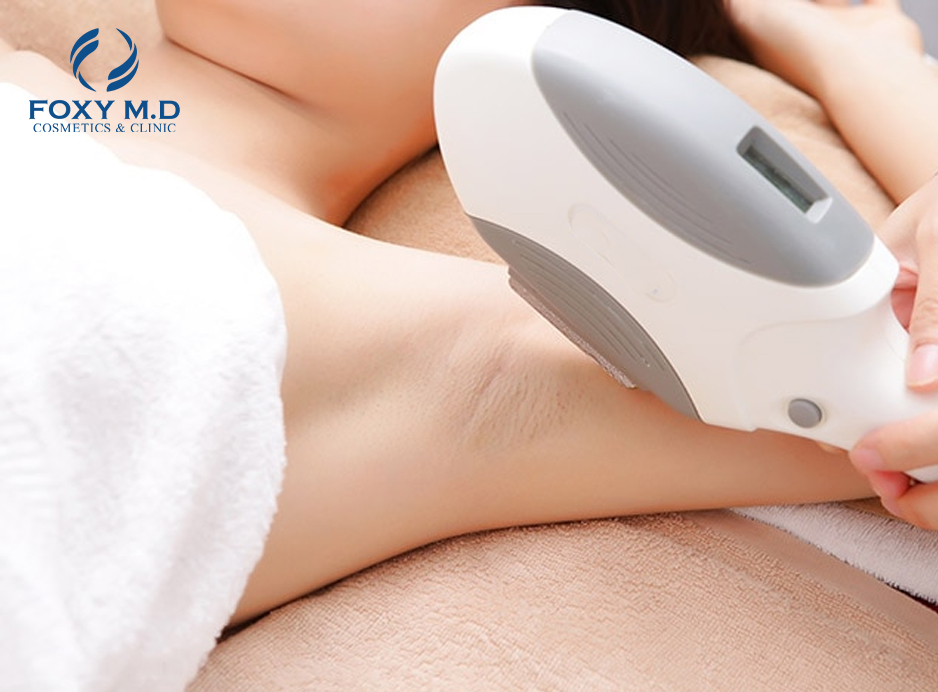
On the other hand, high-tech hair removal methods (such as Laser, IPL, or DPL like Foxy uses) target the hair follicle directly. Heat energy damages the hair bulb and cuts off nourishment, causing the follicle to shrink and lose its ability to produce thick hair.
So why do I say it can grow back? Because hair follicles may recover over time—especially due to internal factors within the body.
That said, regrowth is usually minimal and mild. Most “regrowth” is just soft peach fuzz and doesn’t affect appearance.
Why Does Hair Grow Back After Treatment? 4 Key Factors
To fully understand whether permanent hair removal grows back, I’ve summarized the four most important factors based on medical research and real-life experience—also aligned with what dermatology experts commonly explain.
1. The Natural Hair Growth Cycle
Hair doesn’t grow all at once. It follows a cycle of three phases:
-
Anagen (Growth phase): Hair is actively growing and firmly attached to the follicle. This is the best time for hair removal treatments because energy reaches the root most effectively.
-
Catagen (Regression phase): Hair stops growing and the follicle shrinks.
-
Telogen (Resting/Shedding phase): Hair detaches and falls out, making way for new hair.
Most technologies work best in the Anagen phase, but at any moment only about 15–20% of your hair is in this phase.
That’s why a full course (often 8–10 sessions or more) is necessary—to “catch” all hairs as they enter Anagen. If you stop mid-way or come at irregular times, hairs in the other phases will grow later, making you feel like the treatment “didn’t work.”
2. The Technology Used
Technology determines up to 60% of your results. The market has everything from low-power handheld devices to expensive medical laser systems.
-
Older IPL: Uses broad intense light. Results are slower, require more sessions, and regrowth is more likely because energy may not reach deep enough.
-
Diode Laser: More effective and deeper penetration, but can feel more uncomfortable and often costs more.
-
DPL (Dynamic Pulsed Light): A technology I personally rate very highly, and it’s used by reputable clinics like Foxy. DPL combines the strengths of IPL and laser—strong follicle targeting while staying gentle and safe. It typically reduces regrowth compared to older tech.
If you choose a place with low-quality machines and weak energy output, follicles may not be destroyed effectively—so regrowth can come back dark and coarse.
3. Your Body and Hormones
This is the “uncontrollable” factor—and it explains why two people using the same technology and treatment plan can have different outcomes.
Androgen hormones stimulate thicker, darker hair growth. People with higher androgen levels (commonly men, or women with PCOS) often have stronger follicles.
Even if follicles are weakened, hormonal stimulation can push the body to repair them over time. Hormonal changes during puberty, pregnancy, postpartum, and perimenopause can also alter hair growth patterns.
Pregnant women often notice faster, thicker hair growth. So whether permanent hair removal grows back depends heavily on how stable your hormones are.
4. Post-Treatment Aftercare
Many people assume the job is done after a session—but home care affects long-term results directly.
Using products that stimulate hair growth, or rich body creams that over-nourish follicles, may speed up regrowth.
Also, not protecting treated skin from the sun can cause tanning/darkening. When the skin becomes darker (more surface melanin), light energy gets absorbed and scattered at the surface during future sessions—reducing how much reaches the follicle. That gives leftover follicles a chance to recover.
Another mistake: shaving or plucking incorrectly between sessions, which can stimulate follicles again and undo previous progress.
Deep Dive: Why Is DPL So Popular?
Earlier, I mentioned DPL as an optimal solution to reduce regrowth. So what makes it better?
DPL works on an advanced selective photothermolysis principle. It doesn’t just burn visible hair—it penetrates into the dermis.
There, DPL energy essentially blocks the follicle’s nutrient pathway. Think of the follicle like a tree—if you cut off water and fertilizer, the tree weakens and eventually dies.
Unlike traditional lasers that concentrate very strong energy in one spot (which can cause burning), DPL distributes energy more evenly and deeply. This helps target deeper follicles while protecting the skin surface.
Because it “cuts off nourishment” more thoroughly, DPL often extends the time before regrowth much longer than older methods. Any regrowth is usually weak, fine, and sheds naturally.
Plus, DPL has a bonus effect: it stimulates collagen production, making skin smoother, brighter, tightening pores, and reducing darkness or roughness—exactly what many people love.
Costs of Permanent Hair Removal and What Affects Pricing
Pricing is closely tied to quality and regrowth risk. Many people wonder why one place charges 50k for underarms while another charges hundreds of thousands or even millions.
In aesthetics, you truly get what you pay for. Prices usually range from a few hundred thousand to several million VND depending on area and package, influenced by:
-
Machine and technology quality: Medical-grade DPL systems are expensive, plus maintenance and pulse head replacements. Extremely cheap places often use outdated/weak devices—meaning results fade fast.
-
Technician skill: Proper settings (wavelength, pulse, power) require training and expertise. Skilled technicians maximize results and reduce regrowth.
-
Warranty policy: This is the most important part. Because bodies change, hair may return years later. Reputable clinics often offer lifetime maintenance packages—pay once, and even 5–10 years later, touch-ups can be free (sometimes with a small hygiene tool fee).
-
Your hair/skin condition: Dense hair, ingrown hair, or folliculitis may require more complex treatment and extra skin therapies, increasing cost.
How to Maintain Results as Long as Possible
Even with the best technology, your cooperation still contributes 50% to success. To make the answer to “Will it grow back?” become “No” or “Not for a very long time,” follow these tips:
-
Stick to the schedule: Don’t skip sessions. Early stages often require visits every 3–4 weeks to target Anagen hairs properly.
-
Do not pluck or wax at home: Plucking removes the root—the target for DPL/light energy. Without the root, the next session becomes ineffective. If needed, shave gently.
-
Scientific skincare: Use gentle moisturizers, avoid harsh cleansers for 24 hours after treatment, and exfoliate regularly once skin is stable to prevent ingrown hair.
-
Healthy lifestyle: Sleep well, eat balanced meals, manage stress. Stable hormones help keep hair growth under control.
Quick FAQ
Q1: Does permanent hair removal affect sweat glands?
Not at all. Hair follicles and sweat glands sit close to each other but function independently. Light energy targets melanin in hair, not sweat glands. In fact, removing hair may help reduce odor by decreasing bacteria buildup.
Q2: Should pregnant women do hair removal?
Experts generally recommend not doing it during pregnancy. Hormonal changes make results less stable and regrowth faster. Also, protecting the mother’s comfort and peace of mind is important—wait until after childbirth and recovery.
Q3: Does bikini hair removal affect fertility?
This is an unfounded myth. Light energy only penetrates the dermis (a few millimeters deep), nowhere near internal organs like the uterus or ovaries. It does not affect reproductive health.
Q4: If hair grows back after warranty ends, do I have to pay again?
It depends on the package. Lifetime packages often allow free touch-ups forever (possibly a small tool fee). Time-limited packages (1–3 years) or pay-per-session plans may require extra payment afterward.
Conclusion
So, does permanent hair removal grow back?
It can—but regrowth is usually minimal, finer, lighter, and far less noticeable, especially if you choose the right technology and complete the full treatment plan.
Hair removal isn’t just about appearance—it’s also a way to care for yourself and feel confident in any outfit or activity. Don’t stress too much about regrowth. With scientific advancements—especially DPL technology—this issue can be managed easily.
Most importantly, do your research carefully, choose a reputable clinic with clear warranties and medical-standard protocols, and don’t sacrifice quality just to save money.
If you’re looking for a safe, effective solution with advanced DPL and reliable warranty policies, you can consider reputable aesthetic clinics such as Foxy. Wishing you smooth, radiant skin just the way you want! ✨