Lượt xem: 4.015

Recently, I’ve been receiving lots of questions from many of you about skin rejuvenation methods. Sooner or later, we all have to face aging—fine lines around the eyes, or sagging skin along the cheeks.
That’s a natural process, but with modern technology, we can absolutely slow it down. Among today’s options, collagen thread lifting has emerged as a “lifesaver” for those who are afraid of surgery.
But does collagen thread lifting truly work? Is it really as “miraculous” as people say, or is it just a marketing gimmick?
Today, let’s “dissect” this topic in the most scientific and objective way possible. I’m not here to sell anything—just to share knowledge so you can make the most informed choice for yourself.
.png)
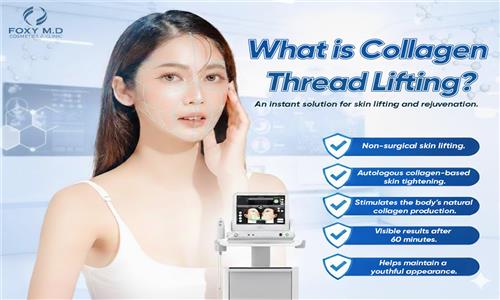
Before evaluating effectiveness, we need to understand what this method actually is. Collagen thread lifting (also known as facial thread insertion) is a minimally invasive aesthetic medical procedure that does not require surgery.
Doctors use specialized biocompatible threads and place them beneath the skin’s tissue layer. This network of threads acts like a supportive “scaffold” to lift and hold facial tissues immediately.
However, the real “magic” lies in the biological mechanism behind it. When the threads are inserted, they trigger a beneficial “controlled inflammatory” response.
Your body recognizes the thread as a “foreign object” and activates its natural healing process. Fibroblasts gather around the threads and produce collagen and elastin, forming a supportive layer around them.
This process makes the skin firmer, more elastic, and thicker from within. That’s why even after the threads dissolve over time, the newly formed collagen structure can continue to maintain the lifting effect.
Common thread materials include PDO (Polydioxanone), PCL (Polycaprolactone), and PLLA. Each has a different absorption time and durability depending on the degree of aging and individual skin condition.
This is the most important question I want to answer. Based on clinical studies and real-world treatment outcomes, the answer is: YES—but the results depend on many factors.
The effectiveness of collagen thread lifting can be seen in two phases. The first is the immediate result right after the procedure.
As the doctor tightens the threads, sagging areas are lifted instantly. You may notice softened smile lines, a sharper jawline, and more defined cheek contours.
The second phase is the longer-term result from your body’s natural collagen production. After about 1–2 months, once the collagen network stabilizes, the skin becomes smoother, more radiant, and visibly firmer.
According to many medical studies, this method can make the face look 5 to 10 years younger, depending on individual factors. It is especially effective for mild to moderate aging—when the skin is starting to sag but not severely.
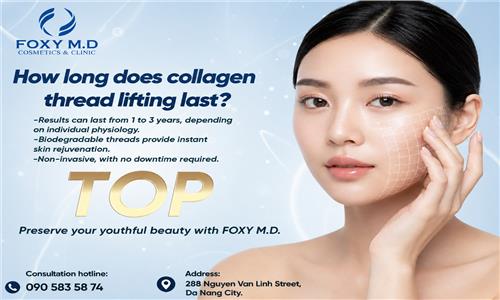
However, it’s important to note that the results are not permanent. On average, the effect can last from 2 to 5 years, depending on the type of threads used and how well you care for your skin afterward.
Compared with a surgical facelift, thread lifting may not last as long. But in return, it is safer, less invasive, and has a much faster recovery time.
At reputable clinics such as Foxy M.D Cosmetics & Clinic, effectiveness is also evaluated through personalized treatment plans. Doctors assess each patient’s facial structure to determine the ideal number of threads and the best insertion direction for optimal results.

Not everyone is an ideal candidate, and it’s important to understand that. Collagen thread lifting is generally most suitable for people between 30 and 50 years old.
At this age, natural collagen production begins to decline significantly, but the skin still retains relatively good elasticity. People with deeper nasolabial folds, a double chin, or sagging cheek areas often see the most noticeable improvement.
On the other hand, if your skin is very thin, has excessive fat, or has severe sagging (often in people over 60), the results may be limited. In such cases, a doctor may recommend combining thread lifting with other treatments or considering surgical options.
This procedure is also an excellent choice for those who want cosmetic improvement but fear pain, scars, or don’t have time for a long recovery. It typically takes about 45–60 minutes, and most people can return to normal activities almost immediately.
However, pregnant women, people with facial infections, or those with blood clotting disorders may not be suitable candidates. That’s why thorough medical consultation before treatment is essential.
Cost is always a major concern. So how much does thread lifting cost, and why do prices vary so widely between providers?
In reality, there isn’t a fixed price. Costs typically range from a few million to tens of millions of VND, depending on several key factors.
1. Type of thread used: This is the most important factor. PDO threads tend to be more affordable but may not last as long as PCL or PLLA. Premium imported threads from Korea, the U.S., or Europe often cost more but may provide better safety and stronger collagen stimulation.
2. Number of threads: Everyone’s aging condition is different. Lifting only the smile lines costs less than a full-face lift combined with double-chin improvement. Your doctor will determine how many threads are needed for your desired result.
3. Doctor’s skill: Thread lifting is a technically demanding procedure requiring deep knowledge of facial anatomy. The doctor must insert threads into the correct layer (often near the SMAS). Too shallow can cause thread visibility; too deep may reduce lifting effectiveness or risk nerve injury. Therefore, procedures performed by experienced specialists at reputable clinics like Foxy M.D usually cost more than those at small spas—but the safety and quality are worth it.
4. Facility reputation and standards: The procedure must be performed in a strictly sterile environment to prevent infection. Supporting equipment and post-treatment care also contribute to overall pricing.
You can refer to local price lists—for example, in Da Nang—to get a general idea. Still, I strongly advise against choosing the cheapest option for invasive treatments.
To help you feel more confident, here’s a brief overview of the standard steps:
Step 1: Consultation and assessment. The doctor examines your skin, evaluates aging severity, and recommends the appropriate thread type. This is also when you should ask whether thread lifting will be effective for your specific case.
Step 2: Cleansing and numbing. The face is thoroughly cleaned and makeup removed. Then topical numbing is applied for about 30–40 minutes to ensure comfort during the procedure.
Step 3: Mapping the plan. The doctor marks the thread pathways on the face with a medical pen to ensure accuracy and symmetry.
Step 4: Thread insertion. The doctor inserts the threads beneath the skin according to the mapped lines. The process is typically quick and gentle. You stay awake and can communicate with the doctor.
Step 5: Post-treatment care. After completion, the doctor checks the results, provides aftercare instructions, and schedules a follow-up visit.
To make it easier to understand, here’s a quick comparison with popular rejuvenation options like HIFU, fillers, and surgical facelifts.
Compared with HIFU/Ultherapy: HIFU uses ultrasound energy to stimulate collagen without any invasion. However, results tend to appear more gradually and are best for very mild sagging. Thread lifting provides more immediate and noticeable lifting for moderate sagging.
Compared with dermal fillers: Fillers are mainly used to restore volume in hollow areas (such as temples or sunken cheeks). Thread lifting focuses on lifting and repositioning. These two methods are often combined for a more comprehensive rejuvenation result.
Compared with surgical facelift: Surgery is the most definitive solution for severe sagging because it removes excess skin. But it comes with anesthesia risks, scarring, and longer recovery. Thread lifting is an excellent “middle step” for those who don’t want—or don’t yet need—surgery.
Whether collagen thread lifting truly works also depends heavily on how well you care for your skin afterward. Here are key tips based on experience:
Avoid strong facial movements for 1–2 weeks. Don’t laugh too widely or open your mouth too big to prevent threads from shifting before they stabilize.
Avoid facial massage and sleeping face-down. Pressure on the face can reduce lifting results.
Avoid foods that may increase swelling or scarring if you’re sensitive (such as water spinach, seafood, or sticky rice) for the first few days.
Follow your doctor’s medication and follow-up schedule. If you experience unusual pain or swelling, contact the clinic immediately.
Consider supplementing oral collagen and vitamin C to support collagen production and maximize results.
Does collagen thread lifting hurt?
You’ll receive topical numbing and local anesthesia, so pain is minimal. You may feel slight pinching or tightness as threads are placed, but it’s usually tolerable.
Will my face swell afterward?
Mild swelling or bruising is normal and usually improves within 3–7 days. Cold compresses can help reduce swelling faster.
When will I see the best results?
You’ll see lifting immediately, but the most natural and radiant result typically appears after about 1 month, once new collagen has developed.
Will thread lifting leave scars?
The needle entry points are tiny—similar to small acne marks—and usually heal quickly without noticeable scarring when done properly.
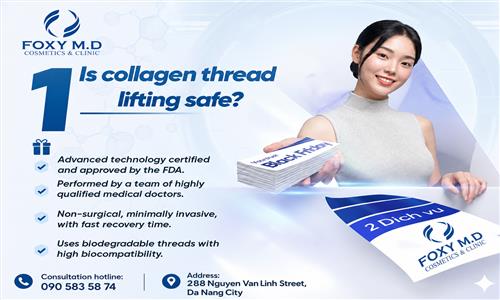
So, does collagen thread lifting really work? The answer is YES. It’s a modern, effective, and relatively safe rejuvenation solution when performed correctly. It helps restore youthful facial contours naturally—without the pain and downtime of surgery.
That said, choosing the right provider is essential. Take time to research and select reputable clinics with highly qualified doctors, such as Foxy M.D Cosmetics & Clinic, to ensure your safety. Don’t let low-price advertising distract you from potential health risks.
I hope this article has given you helpful information and the most objective perspective possible. Wishing you always confidence, beauty, and the best choice for your own journey!