
Lượt xem: 4.015
What Is Collagen Thread Lifting? Decoding the Instant Rejuvenation Trend
Hi everyone! I’m your familiar companion who loves sharing science-based beauty tips. On the journey to timeless beauty, you’ve probably heard the terms “collagen thread lifting” or “thread insertion for skin lifting” more than once, right?
This method is considered one of the hottest beauty trends worldwide, loved by celebrities and beauty enthusiasts alike. But what exactly is collagen thread lifting? Is it really as “miraculous” as people claim—and is it suitable for your skin?
Today, let’s sit down, sip some tea, and break down this technology in a professional yet super easy-to-understand way. This article aims to give you a neutral and accurate view so you can make the smartest decision for your beauty.
Understanding the Basics: What Is Collagen Thread Lifting?
To answer the question “What is collagen thread lifting?”, we first need to understand how skin ages. Over time, the collagen and elastin network beneath the skin breaks down, causing facial tissues to sag and lose firmness.
Collagen thread lifting (Thread Lift) is a minimally invasive, non-surgical aesthetic procedure—meaning there’s no cutting or major incisions. Doctors use special biological threads and insert them under the skin through a very fine needle.
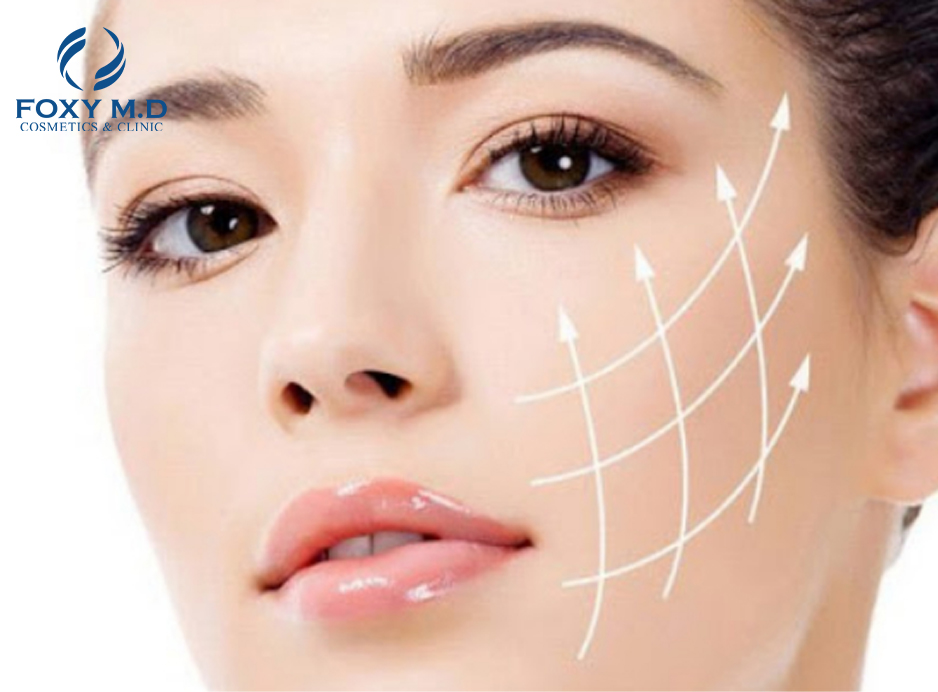
Think of these threads as a strong “artificial framework.” They are placed into the correct fat and muscle-support layers, forming a lifting network that supports and pulls sagging skin upward immediately.
But the real benefit isn’t only the physical lifting. The core of this method also lies in its powerful biological stimulation inside the skin.
Once the thread is placed in the skin, it triggers the body to naturally produce new collagen and elastin around it. This “self-made” collagen helps the skin become firmer, more elastic, healthier-looking, and naturally younger over time.
.png)
How Does Collagen Thread Lifting Work?
Many people wonder how a few thin threads can lift sagging cheeks or even reduce a double chin. The answer lies in the special design of aesthetic threads.
These threads are often made with small barbs (either molded or cut barbs) along the thread body. When inserted, these barbs anchor into the SMAS layer (a deep supportive facial layer) and surrounding tissue, creating strong holding points.
The doctor then gently tightens the thread, which lifts the sagging skin and underlying tissue upward.
At the same time, the body sees the thread as a controlled “micro-injury” (a beneficial one). In response, the immune system activates healing: cells gather around the thread, blood flow increases, and new tissue forms.
This process helps thicken and strengthen the skin, improving deep folds like nasolabial lines and fine wrinkles like crow’s feet.
Types of Threads: A Key Factor That Determines Quality
When learning what collagen thread lifting is, it’s important to know that not all threads are the same. Many types exist, each with different materials and benefits—suited to different aging concerns.
1) PDO Threads (Polydioxanone)
PDO is the most common thread type and has been used in medical surgery (including cardiovascular sutures) for decades. It’s considered very safe and usually dissolves completely in about 6–8 months.
Even though PDO doesn’t stay long, the collagen stimulation can continue for 1–2 years afterward. This option is great for early aging and for those who want a gentle introduction to thread lifting.
2) PCL Threads (Polycaprolactone)
PCL is a newer generation of thread and is seen as a major advancement in aesthetic medicine. PCL threads are softer, more flexible, and stronger, and they dissolve more slowly—often lasting up to 24 months.
Because they stay longer, they can stimulate collagen more continuously. Results may last 3–5 years, making this a popular choice for longer-term rejuvenation.
3) 24K Gold Collagen Threads
These are usually PDO or PCL threads coated with an ultra-thin layer of pure 24K gold. Gold is believed to have anti-inflammatory, brightening, and antioxidant benefits.
However, this option is typically expensive and requires a very skilled doctor. The right choice depends on your skin condition and your budget.
Why Is Collagen Thread Lifting So Popular?
It’s not surprising that this method has become a “favorite” at reputable clinics like Foxy M.D. Here are the major reasons thread lifting stands out compared to traditional methods:
Instant Results—No Waiting
Unlike skincare products or oral collagen that may take months, thread lifting provides visible contour improvement immediately after the procedure (often within about 60 minutes).
You can look in the mirror and notice:
-
Softer smile lines
-
Reduced double chin appearance
-
A sharper jawline
This is perfect for busy people or anyone who wants to look better quickly for events.
Safer and Minimally Invasive
Many thread materials used in aesthetics have been evaluated for safety, and the procedure avoids cutting away skin. That means reduced risks of scars, anesthesia complications, or heavy bleeding.
The threads are designed to dissolve naturally, so you don’t have to worry about a permanent foreign object remaining under the skin.
Very Fast Recovery
A surgical facelift may require weeks of downtime, while thread lifting typically needs only 1–2 days of rest before returning to normal life.
Needle entry points are tiny and usually close within 24 hours without leaving marks. Light makeup is often possible after a few days (depending on your doctor’s instructions).
What Does the Thread Lifting Procedure Look Like?
For safety and results, thread lifting should be performed in a sterile medical environment. Below is a standard medical-grade process:
Step 1: 1-on-1 consultation
The doctor evaluates sagging level, identifies areas of muscle drop, and designs a plan (thread type + number of threads).
Step 2: Cleansing and numbing
Skin is cleaned thoroughly, then numbing cream and local anesthesia are applied.
Step 3: Mapping and marking
The doctor draws thread vectors (lifting directions) based on anatomy to avoid nerves and blood vessels.
Step 4: Thread insertion and lifting
Threads are inserted into the SMAS or deep dermis following the markings. The doctor tightens the threads to lift tissue and trims excess thread.
Step 5: Post-treatment care
Cold compress is used to reduce swelling, and you’ll receive aftercare instructions for diet and daily habits.
Who Is a Good Candidate for Collagen Thread Lifting?
Even though it’s a strong method, it’s not ideal for everyone. Proper patient selection is essential.
Who SHOULD consider it:
-
Men and women aged 30–50
-
Mild to moderate sagging
-
Deep nasolabial folds, double chin, sagging jawline affecting the V-line
-
People who want rejuvenation but avoid surgery
-
Busy individuals who can’t take long downtime
Who should NOT do it:
-
Pregnant or breastfeeding women (because of anesthetics/medications)
-
Severe sagging with excess loose skin (surgery may be more effective)
-
Uncontrolled diabetes, bleeding disorders, uncontrolled hypertension
-
Active infections, severe acne inflammation in the treatment area
How Much Does Collagen Thread Lifting Cost? What Affects the Price?
There is no one fixed price because thread lifting is highly personalized. Market pricing often ranges from a few million to tens of millions of VND per treatment plan, depending on:
-
Thread type: PCL and 24K gold-coated threads usually cost more than standard PDO
-
Number of threads: Full-face lifting costs more than treating one small area
-
Doctor skill: This matters most—experienced specialists usually charge more, but safety and results are far better
-
Clinic standards and warranty: sterile procedures, strong aftercare systems, and clear warranty policies also affect cost
“Golden” Aftercare Tips After Thread Lifting
Aftercare accounts for up to 30% of success. Keep these key points in mind:
-
First 3–5 days: avoid strong facial movements (big laughter, wide mouth opening, chewing hard foods). Eat soft foods like porridge, soup, smoothies.
-
Hygiene and medication: clean gently with saline, stroke skin upward, take prescribed anti-inflammatory meds. Do not massage or press the face.
-
Diet restrictions: many doctors recommend avoiding sticky rice dishes, chicken, seafood, water spinach for 1–2 weeks. Avoid alcohol and smoking.
-
Skin protection: avoid direct sun, steam rooms, and hot water. Use sunscreen and cover your face when outdoors.
Frequently Asked Questions (FAQ)
Q1: Does it hurt?
With numbing and local anesthesia, pain is minimal. Afterward, mild soreness or tightness may last 1–2 days.
Q2: How long do results last?
Usually 3–5 years, depending on thread type and your body’s response. Even after threads dissolve, collagen stimulation can continue to maintain improvement.
Q3: Does it leave scars?
No. Entry points are needle-sized and heal quickly without scarring—this is often called a “no-trace” procedure.
Q4: Can I combine thread lifting with other treatments?
Yes. Doctors often combine thread lifting with fillers (volume), Botox (dynamic wrinkles), or HIFU for a more comprehensive rejuvenation result.
Conclusion
Through this article, I hope you now clearly understand what collagen thread lifting is and why it has become such a major beauty trend. It’s a big step forward in aesthetics—helping people fight aging with less fear than surgery.
However, “choosing the right place” is always the golden rule. Results depend heavily on the doctor’s technique and the quality of the threads. So do your research carefully and choose reputable, licensed clinics such as Foxy M.D Cosmetics & Clinic for maximum safety.
Never hesitate to invest in yourself—a youthful, radiant appearance can open doors to more confidence and joy in life. If you still have questions, feel free to leave a comment or reach out to professionals for detailed advice.
Wishing you always stay beautiful, confident, and glowing! ✨