Lượt xem: 3,930

Hi everyone, I know that "stubborn" pitted scars are always an obsession that makes us lose our inherent confidence. Pitted scars not only make the skin surface less smooth but also make applying makeup or skincare much more difficult.
Currently, the demand for searching and summarizing common ways to treat pitted scars is becoming the focal point of the beauty community. However, in a "matrix" of technology, understanding the scientific mechanism correctly will help us avoid unfortunate mistakes.
In this long and detailed article, I will join you in diving deep into the world of skin regeneration technology. Let's explore together which is the key to "reviving" damaged skin areas in the safest way.
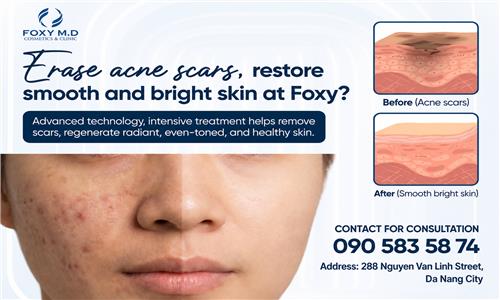
To understand clearly when summarizing common ways to treat pitted scars, we need to know that pitted scars are actually a form of permanent damage. When Collagen and Elastin fibers in the dermis are broken due to inflammatory acne or chickenpox, the skin loses its support frame.
The consequence is that the skin surface is pulled down, creating sunken craters with different shapes such as ice pick, boxcar, or rolling scars. Beneath each scar spot, there are usually stiff fibrous strands that tightly grip and hold the skin surface so it cannot become flat again.
The treatment process is actually us actively creating controlled "fake injuries." When that happens, the body will activate its self-healing mechanism, promoting fibroblasts to produce new Collagen to fill the gaps.
.png)
In the list of common ways to treat pitted scars, the Subcision method always holds the top priority position. The doctor will use specialized needles to completely cut the scar fibrous strands that are pulling down your skin surface.
Once these fibrous bands are released, the skin will have room to "pop up" and begin the process of new cell proliferation. Next is the Microneedling technique, a classic but still extremely effective method in creating pathways for nutrients.
The tiny needles will create thousands of microscopic channels, strongly stimulating the skin's natural recovery response. Additionally, the TCA Cross method is often used for tiny ice pick scars that machines find difficult to intervene with.
By using acid at a permitted concentration, TCA helps fill these small scars by slightly destroying the old, dead stratum corneum. Combining these physical methods often brings optimal results for skin with many types of mixed scars.
If we talk about breakthroughs, Fractional CO2 Laser is the indispensable name when summarizing common ways to treat pitted scars. The Laser beam with a long wavelength will act deep into the dermis, creating tiny thermal injury columns to stimulate proliferation.
This technology not only helps fill scars but also supports shrinking pores and evening out skin tone very well for you. Besides, RF Microneedling technology (radiofrequency microneedling) is also a popular trend due to its ability to transmit heat deeply.
RF waves will shrink loose Collagen fibers and stimulate the production of new Collagen without causing too much damage to the surface. This helps you shorten downtime and minimize the risk of post-inflammatory hyperpigmentation compared to traditional Lasers.
Another modern method is Scar Meso, delivering Growth Factors or PRP directly into the base of the scar crater. This is the most abundant source of "raw materials" to speed up the filling rate of skin areas lacking structure.
When researching common ways to treat pitted scars, cost is always something that makes us consider quite a bit before making a decision. In fact, the price of a scar treatment course usually ranges from several million to tens of million VND depending on the condition.
The first factor is the severity and the area of the pitted scars on your face at the moment. Long-term, fibrous scars will require more sessions and more complex techniques than newly formed scars.
The technology applied is also a part of the price structure; for example, imported new-generation Laser machines will have higher costs. The professional level of the expert performing the treatment plays a decisive role, as just one wrong move can cause irreversible skin damage.
Finally, dermo-cosmetic products to support recovery and sun protection at home are also part of the budget you need to note. A correct roadmap is not just about using machines but also about how you take care of your skin after each intervention session.
Let's not forget that Collagen is synthesized from the very nutrients you intake into your body every day. To support the scar treatment process, you need to supplement an abundant amount of Protein from fish, white meat, eggs, and beans.
Scientific research has proven that Vitamin C acts as the most important catalyst in Collagen metabolism. A "Repairing Boost" smoothie recipe I suggest includes: guava, strawberries, and a small spoonful of raw honey.
Guava contains an extremely high amount of Vitamin C, which combined with antioxidants in strawberries will help protect fresh skin cells. Zinc is also a "golden" mineral that helps promote the healing process and regenerate connective tissue sustainably.
You can find zinc in nuts like pumpkin seeds, sunflower seeds, or shellfish like oysters. Maintaining a healthy menu will help the results of common scar treatment methods reach maximum capacity.
After undergoing methods in the list of common ways to treat pitted scars, your skin will be extremely fragile. The "immutable" rule is absolute sun protection, because UV rays will destroy the young Collagen layer that has just formed.
You should prioritize broad-spectrum sunscreens and cover up carefully with dark-colored cloth masks when going out. Limit touching your face or arbitrarily peeling off the scabs on the skin; let them fall off as naturally as possible.
Hydrating with products containing Hyaluronic Acid (HA) or B5 will help soothe the skin and create an ideal moist environment for cells to grow back. We also need to avoid stimulants like alcohol and cigarettes because they constrict blood vessels, reducing the amount of oxygen reaching the scar area.
Be patient in following the protocol, because the Collagen production process takes at least 28 days to show the first changes. Don't be too impatient and use strong peeling products, as they can lose the effectiveness of an entire arduous treatment course.
Below are some concerns that you are most interested in when starting the pitted scar treatment journey.
Does treating pitted scars hurt a lot, everyone? Usually, you will be numbed very thoroughly, so the sensation is just a slight sting depending on each person's pain threshold.
After how many sessions will the scars fill up completely? It depends on your body chemistry, but on average, you will see clear results after about 3 to 5 intensive treatment sessions.
Will pitted scars return after being treated? Pitted scars filled with natural Collagen will exist permanently; however, the skin will still age over time.
Which method among the common ways to treat pitted scars is best for sensitive skin? RF Microneedling is usually a safer choice for sensitive skin due to its good heat control capability.
Do we need to avoid eating water spinach or beef? This view does not have a clear scientific basis, but you should prioritize benign foods so the skin recovers quickly.
In short, understanding and summarizing common ways to treat pitted scars will help you have a more realistic and optimistic view. Pitted scars can be significantly improved if we choose the right method and persistently complete the medical protocol.
The skin is a precious asset; cherish and take care of it with correct knowledge and persistent patience. Don't let scars blur the radiance and courage you naturally have in daily life.
A smooth face will bring great confidence, helping us achieve more success and joy. If you are still wondering about the type of scar you are facing, the personalized protocols at Foxy are always ready to help you find the optimal solution.