Lượt xem: 4,230

Acne scars are one of the most common skin concerns that develop after inflammatory acne, skin damage, or prolonged infection.
This condition causes the skin surface to develop small or deep depressions, making the skin less smooth and affecting facial appearance.
Many people who experience this issue often look for quick and instantly effective solutions for acne scar treatment to improve their skin.
However, to understand how to treat acne scars effectively, it is first necessary to understand how they form and the factors that affect the skin’s recovery process.
In this article, we will take a comprehensive look at acne scars, the most common treatment methods available today, and the important things to keep in mind when caring for scarred skin.
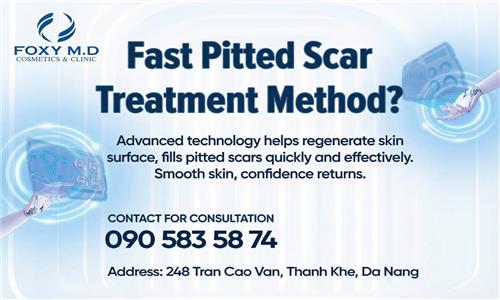
Many people wonder whether there is really such a thing as a quick and instantly effective solution for acne scar treatment.
In reality, in modern aesthetic dermatology, advanced technologies can significantly improve acne scars after a treatment course.
Here, the term “quick” usually means shortening the recovery time and stimulating skin regeneration more effectively compared with conventional skincare methods.
Modern acne scar treatment solutions often focus on stimulating the production of collagen and elastin in the skin.
These two components play an important role in restructuring skin tissue and helping the skin surface become smoother and more even.
Thanks to modern skin regeneration technologies, the healing process can happen faster and gradually improve the depth of scars over time.
.png)
Collagen is an important structural protein found in the dermis of the skin.
When the skin is damaged by inflammatory acne or long-term infection, the collagen structure is broken down, causing depressed scars to form.
Modern acne scar treatments usually aim to stimulate the body to produce new collagen.
This process helps fill in the depressed areas and improve the skin’s elasticity.
As a result, the skin surface gradually becomes smoother and more even in tone.
To find a quick and instantly effective solution for acne scar treatment, it is important to clearly understand what causes this condition.
Acne scars usually develop when the skin’s tissue structure is damaged during inflammation or skin injury.
This is the most common cause of acne scars.
When inflammatory acne lasts for a long time or is squeezed incorrectly, the inflammatory process destroys collagen and elastin fibers in the skin.
After the acne heals, the affected skin may not recover completely, leading to depressed scars.
Some habits, such as squeezing pimples by hand, scratching the skin, or using unsuitable products, can also damage the skin structure.
These injuries increase the risk of acne scarring.
In some people, genetic predisposition may affect the skin’s ability to regenerate collagen.
This makes the skin more likely to form acne scars after injury.
Acne scars do not appear in just one form.
In dermatology, acne scars are usually divided into several types based on their shape and depth.
These scars are narrow and deep, shaped like a “V.”
Ice pick scars are often more difficult to treat because they extend deeply into the dermis.
This type of scar appears as a wider depression with clearly defined edges.
Boxcar scars commonly appear on the cheeks.
Modern skin resurfacing methods can often improve this type of scar quite effectively.
Rolling scars create an uneven, wavy skin surface.
They are usually caused by fibrous bands under the skin pulling the skin downward and forming depressed areas.
Today, there are many acne scar treatment methods available depending on the skin condition and scar severity.
These methods usually focus on stimulating skin regeneration and improving collagen structure.
Laser is one of the most common technologies used in acne scar treatment.
This technology uses light energy to stimulate collagen regeneration in the skin.
As a result, the skin structure can gradually improve over time.
Microneedling is a method that creates tiny controlled injuries on the skin surface to stimulate the body’s natural healing response.
This process helps increase collagen production and supports acne scar improvement.
For some types of acne scars, especially rolling scars, subcision may be used.
This technique helps release the fibrous bands that pull the skin surface downward.
After subcision, the skin may gradually recover and become flatter.
In many cases, dermatology specialists combine several different methods to increase treatment effectiveness.
For example, laser may be combined with microneedling or other collagen-stimulating methods.
This combination helps optimize the skin regeneration process and improve acne scars more effectively.
The effectiveness of a quick and instantly effective acne scar treatment solution can vary depending on many factors.
Understanding these factors helps create more realistic expectations during treatment.
Mild acne scars are generally easier to improve than deep or long-standing scars.
Deep scars often require more treatment sessions.
Modern technologies may provide better treatment outcomes than traditional methods.
Acne scar treatment should be performed by someone with expertise in aesthetic dermatology.
Correctly assessing the scar type and choosing the appropriate treatment method plays a very important role.
After acne scar treatment, proper skincare can help enhance the recovery process.
For example, protecting the skin from sunlight, keeping it moisturized, and following skincare instructions carefully.
In recent years, aesthetic dermatology technologies have advanced significantly and provided more quick and instantly effective acne scar treatment solutions than before.
Instead of focusing only on the skin surface, modern methods often work deep in the dermis to stimulate tissue regeneration and the production of new collagen.
Thanks to this mechanism, the skin can gradually restore its natural structure and improve the depth of scars over time.
Each technology works in a different way and is selected depending on the scar type, scar severity, and the individual skin condition.
Laser is one of the most common methods for acne scar treatment.
This technology uses light energy to target layers of the skin and stimulate tissue regeneration.
When the laser creates controlled micro-injuries, the body activates its natural repair process and produces new collagen.
This helps improve the skin structure and gradually fill in depressed scar areas.
After a number of treatment sessions, the skin surface may become smoother and more even-toned.
Microneedling uses ultra-fine needles to create micro-injuries on the skin surface.
These tiny injuries stimulate the body’s natural healing mechanism and promote collagen production.
As a result, the skin structure improves and acne scars may become shallower over time.
This method is often used for mild to moderate acne scars.
For rolling scars or scars that are pulled downward by fibrous bands under the skin, subcision can be an effective supportive treatment.
This technique helps release the fibrous attachments beneath the skin so the surface can rise more naturally.
After subcision, the skin is often combined with collagen-stimulating methods to further improve regeneration.
In many cases, dermatologists combine several methods to optimize treatment effectiveness.
For example, subcision may be combined with laser or microneedling.
This approach allows the treatment to target multiple skin layers at the same time and improve structural recovery more effectively.
As a result, quick and instantly effective acne scar treatment solutions may deliver more noticeable improvement than a single method alone.
One of the issues many people care about when looking into acne scar treatment is the cost.
In reality, the cost of quick and instantly effective acne scar treatment solutions can vary greatly depending on many factors.
In general, acne scar treatment costs may range from a few million to several tens of millions VND per treatment course.
However, the exact cost will depend on the skin condition and the treatment method used.
There are several factors that may affect the total cost of acne scar treatment.
Some common factors include:
The severity of acne scars
The treatment technology used
The number of treatment sessions required
The skin condition and healing ability of each individual
In addition, the treatment facility, equipment, and medical team may also affect the cost.
Clinics that use modern technology and standardized medical procedures often have higher prices, but they also tend to provide better safety and more stable results.
To achieve good results, acne scar treatment usually needs to follow a scientific process.
This process helps accurately evaluate the skin condition and choose the most suitable treatment method.
At the first step, a dermatology specialist evaluates the scar type, depth, and affected skin area.
Classifying the scars helps determine the most suitable quick and instantly effective acne scar treatment solution.
After assessing the skin condition, the doctor will build a personalized treatment plan.
This plan may include one or several combined treatment methods.
The goal is to optimize skin regeneration and improve skin structure step by step.
At this stage, treatment technologies such as laser, microneedling, or subcision are applied according to the treatment plan.
The procedure usually takes a relatively short time and is performed following safety standards.
After treatment, the skin needs time to heal and regenerate collagen.
Proper skincare plays an important role in maintaining treatment results.
Common care steps include moisturizing, protecting the skin from sunlight, and following the specialist’s skincare instructions.
To achieve good and safe acne scar treatment results, there are several important points to keep in mind.
Newly formed acne scars are often easier to improve than older scars.
Early treatment may increase the skin’s ability to recover.
Not every method is suitable for every type of scar.
Choosing a quick and instantly effective acne scar treatment solution should be based on the specific skin condition.
Acne scar treatment is a process that takes time for collagen to regenerate.
That is why it is important to stay consistent with the treatment plan to achieve the best results.
After treatment, proper skincare helps improve recovery.
It is especially important to protect the skin from sunlight to avoid post-inflammatory pigmentation.
Many people have similar questions when they look into acne scar treatment.
Below are some of the most common concerns.
The sensation may vary depending on the treatment method.
However, in many cases, current treatment techniques include numbing support, so discomfort is usually greatly reduced.
After each treatment course, the skin needs time to regenerate collagen.
As a result, improvements in acne scars usually become more visible after several weeks or months, depending on the individual’s skin response.
The goal of acne scar treatment is to improve the depth of the scars and make the skin surface smoother.
Depending on the severity of the scars, the results can be significant, but it is rare for the skin to return completely to its original state.
Most acne scar treatment methods need to be performed in a course of several sessions.
This helps stimulate collagen continuously and improve the skin structure in stages.
Acne scars are a common skin condition after acne and can affect facial appearance.
However, with the development of modern dermatology technology, there are now many quick and instantly effective acne scar treatment solutions that can improve skin texture.
Methods such as laser resurfacing, microneedling, subcision, or combination treatments can all help stimulate collagen production and regenerate skin tissue.
As a result, the skin may gradually become smoother and more even-toned over time.
However, treatment effectiveness still depends on many factors, such as scar type, scar severity, and post-treatment skincare.
Therefore, if you are dealing with acne scars, learning carefully about the available treatment methods and consulting a specialist will help you choose the most suitable solution for your skin.
Applying medically standardized treatment technologies along with proper skincare can help improve acne scars in a safer and more sustainable way.