Lượt xem: 4.068

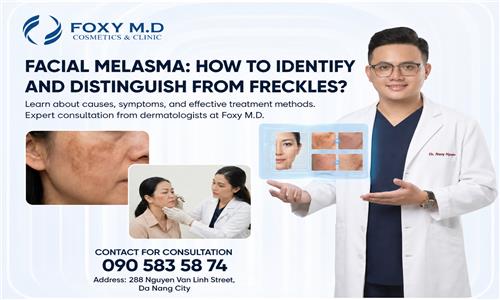
Melasma is a condition of abnormal melanin overproduction in the skin.
It commonly appears on the cheeks, forehead, chin, or around the mouth.
Treating melasma at its root is not simply about fading visible dark spots.
It requires addressing the deeper causes of pigment formation within the skin.
Melanin is produced by melanocyte cells under the influence of various factors, including sunlight, hormones, stress, and genetics.
Therefore, if only the “visible melasma” is treated, the risk of recurrence is very high.
This is why many people undergo treatment repeatedly without achieving long-term results.
To effectively treat melasma at its root, it’s important to understand its causes, as each requires a different approach.
UV rays strongly stimulate melanin production.
This is the most common cause of melasma.
Without proper sun protection, all treatments may become ineffective, as melasma can quickly return.
.png)
Hormonal changes during pregnancy, postpartum, or perimenopause can worsen melasma.
This type is more difficult to treat because it involves internal factors.
As we age, skin regeneration slows down.
Melanin accumulates more easily, leading to dark spots.
Although natural, this process can be controlled with proper care.
Some products may irritate or damage the skin barrier.
This weakens the skin and makes it more prone to pigmentation.
This is often overlooked but significantly affects treatment outcomes.
Effective treatment must target melanin production and support skin recovery.
Tyrosinase is directly involved in melanin production.
When inhibited, melanin levels decrease.
Common ingredients include:
These are the foundation of many modern treatments.
Technologies like laser break melanin into smaller particles, which are then eliminated by the body.
This helps fade melasma faster but must be performed correctly to avoid skin damage.
After treating pigmentation, the skin must be restored.
Collagen and elastin play important roles in improving skin smoothness and tone, reducing recurrence risk.
Uses light energy to break down melanin.
Provides relatively fast results but requires multiple sessions.
Delivers nutrients directly into the skin to:
Gentler than laser and suitable for many skin types.
Use acids to remove dead skin cells and improve brightness.
Proper concentration is essential to avoid irritation.
Modern approaches combine multiple methods to target both surface and deeper layers.
This increases effectiveness and reduces recurrence risk, and is widely recommended by experts.
This is a common question. The answer is: yes—but with the right understanding.
Root-cause treatment does not mean permanent removal.
It means maintaining melanin at a stable level over time.
With proper care, skin can remain even-toned for a long period.
Without maintenance, melasma can return.
Costs vary depending on:
Advanced treatments are usually more expensive but offer better long-term results and safety.
This is the most critical step.
Without it, treatment efforts can be wasted.
Use sunscreen daily—even indoors—and combine with protective measures like hats, masks, and sunglasses.
After treatment, skin becomes more sensitive.
Use gentle products with ingredients like:
Avoid harsh or unknown products.
Stress, lack of sleep, and poor diet can worsen melasma.
Melasma treatment requires patience and professional guidance.
Modern melasma treatment focuses not only on surface correction but also on root causes.
Studies show that combining technology with biological active ingredients improves effectiveness and reduces recurrence.
Personalized treatment is also essential, as each skin type is different.
If you are seeking root-cause treatment:
Many clinics now combine:
This provides comprehensive pigment improvement.
Root-cause melasma treatment requires patience and proper understanding.
There is no instant solution that is both fast and long-lasting.
With the right advanced approach and consistent care, you can achieve brighter, more even-toned, and healthier skin.
The key is not only treatment but also maintenance and protection.