Lượt xem: 4.278

Hi everyone, I know that the feeling of looking in the mirror and seeing tiny pitted scars is not pleasant at all.
Pitted scars are not only aesthetically displeasing but also the biggest "enemy" of confidence in daily communication.
However, the good news is that with the development of aesthetic medicine in 2026, pitted scars are no longer an unsolvable problem.
In this long article, I will join you in learning everything about common methods for treating pitted scars today so that we have the most accurate perspective.
Beauty is a journey that requires perseverance and solid medical knowledge instead of believing in "scars gone after 1 session" advertisements.
Let's start exploring the scientific mechanism behind reviving damaged skin with me.
.png)
To understand common methods for treating pitted scars today, we first need to know what pitted scars actually are.
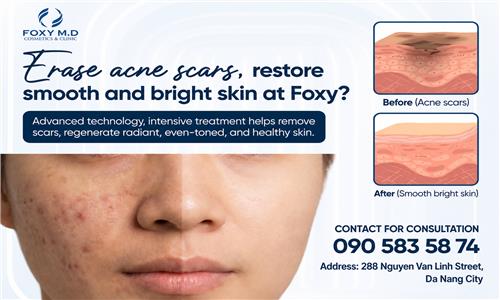
Pitted scars are the result of deep damage to the dermis and hypodermis after inflammatory acne, chickenpox, or accidents.
When collagen and elastin fibers are severely broken, the body cannot produce enough cells to fill the gaps, creating sunken craters.
Beneath each scar spot, there are often tough fibrous connective tissue strands, also known as scar anchors, pulling the skin surface down.
Therefore, if you only apply cream externally, it is almost impossible to affect this complex structure.
Every effective treatment method must focus on two things: breaking the scar anchors and stimulating the production of new cells.
Currently, medicine divides scar treatment into several groups based on physical or chemical mechanisms of action.
First, we must mention Subcision, which is considered the "golden" technique to release the skin surface from hardened scar anchors.
A doctor will use a specialized medical needle to cut the connective fibers beneath the scar crater, helping the skin "pop up" and become flatter.
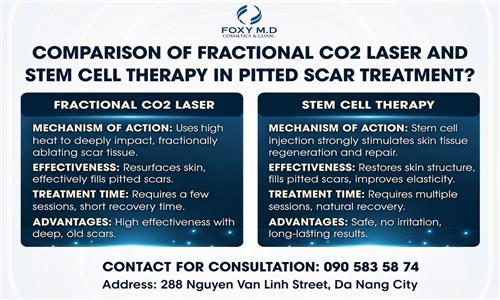
Next is Fractional CO2 Laser technology, which uses tiny laser beams to create microscopic "fake" injuries on the skin.
These injuries will trigger the body's natural self-healing mechanism, forcing the skin to produce a large amount of new collagen to fill the holes.
This is one of the common methods for treating pitted scars today because it treats scars while helping to shrink pores and even out skin tone.
Additionally, Microneedling is also a familiar choice based on a similar principle to lasers but performed through mechanical impact.
For those of you who are afraid of pain or hesitant about downtime, Mesotherapy for pitted scars with growth factors (EGF, PRP) is becoming a new trend.
This method delivers nutrients directly into the base of the scar, providing abundant "raw materials" for the skin to regenerate many times faster.
When performing any of the common methods for treating pitted scars today, our skin undergoes a stage of controlled inflammation.
This is a necessary stage for the body to receive signals that it needs to recover, but it also makes the skin more sensitive than ever.
Sun protection is an absolute must if you don't want the scars to turn from pitted to dark or suffer from post-inflammatory hyperpigmentation.
You also need to understand that pitted scars can never recover 100% to how the skin was originally, but can improve by 60-80% with the right protocol.
Perseverance is the decisive factor, as a scar treatment course usually lasts from 3 to 6 sessions, with each session at least one month apart.
Never be impatient and use herbal wines or peeling creams because they will weaken the skin foundation and make the scars even harder to treat.
I know you are very concerned about finances, but in reality, the price of pitted scar treatment depends on many variables.
Typically, the cost for an intensive treatment course can range from average to high depending on the degree of skin damage.
The most important factor is the severity and age of the scars; newly formed scars will be easier and cheaper to treat than old, hardened scars.
The area of the scarred region on the face also directly affects the amount of medication and the time the doctor operates.
The type of technology you choose also creates a large price difference; for example, high-end Laser or Meso will be more expensive than regular rolling.
Finally, the skill of the practitioner matters; an experienced expert will ensure higher safety and effectiveness compared to a beginner.
Besides external intervention methods, what you eat to support scar filling is also extremely important for you.
We should supplement with protein-rich foods like fish, eggs, and lean meat because these are the building blocks of collagen fibers.
Vitamin C from citrus fruits and kiwi is an indispensable "catalyst" for the synthesis of protein fibers under the skin.
A "beauty drink" recipe I suggest is a strawberry smoothie combined with chia seeds rich in Omega-3 to reduce inflammation and increase elasticity.
You can also supplement with zinc from nuts or seafood to speed up the healing rate of connective tissues.
Avoid sugar and stimulants because they cause glycation, which breaks collagen and reduces treatment results.
Combining a scientific diet will create a strong "internal force" for our skin to revive more quickly.
Below are some of the concerns you frequently send to me when starting your scar treatment journey.
Which method is the most effective for treating pitted scars? There is no single best method, only the one most suitable for your specific scar type (ice pick, boxcar, or rolling).
Is treating pitted scars very painful? With methods like subcision or laser, you will be numbed, so the sensation is only a slight sting or warmth.
How long until I see the scars starting to fill up? Usually after about 2-3 weeks, when the collagen production process happens strongly, you will see a clear improvement in the skin surface.
Does treating pitted scars make the skin thinner? On the contrary, if done correctly, our skin will become thicker and healthier thanks to the newly built collagen layer.
Do common methods for treating pitted scars today cause side effects? Swelling, redness, or scabbing are normal reactions and will disappear after a few days according to natural rules.
In short, thoroughly researching common methods for treating pitted scars today is an important stepping stone for you to regain confidence.
Pitted scars are not scary; what is scary is when we treat them at the wrong place or use the wrong method, causing even more severe skin damage.
Always prioritize addresses with personalized protocols, where a doctor will directly analyze your skin and advise based on your actual condition.
Skin needs time to regenerate; be patient and love yourself more throughout this process.
If you are wondering about your scar condition, a professional consultation at Foxy can be a great start to finding the right technical solution.